

Zakaj se vaši lasje lomijo: poškodbe, razcepljeni konci in obnova vlaken
Finding broken hairs on your clothes, short flyaways that won’t lie flat, ends that look frayed and dull — hair breakage is frustrating, and easy to mistake for hair loss. The good news: breakage is damage to the hair fibre itself, and with the right care it can almost always be improved and prevented.
Here’s why hair breaks, the main causes, and how to repair and protect the fibre.
Breakage is not the same as hair loss
This is the first thing to get clear, because it changes everything you do next. Hair loss (shedding) means whole hairs falling from the root — you’d see a little white bulb at the end. Razbijanje means the strand snaps somewhere along its length, leaving short broken pieces with no bulb. Loss starts at the scalp; breakage is about the condition of the fibre. This post is about breakage. If you think you’re shedding from the root instead, that’s a different concern worth assessing separately.
How the hair fibre works
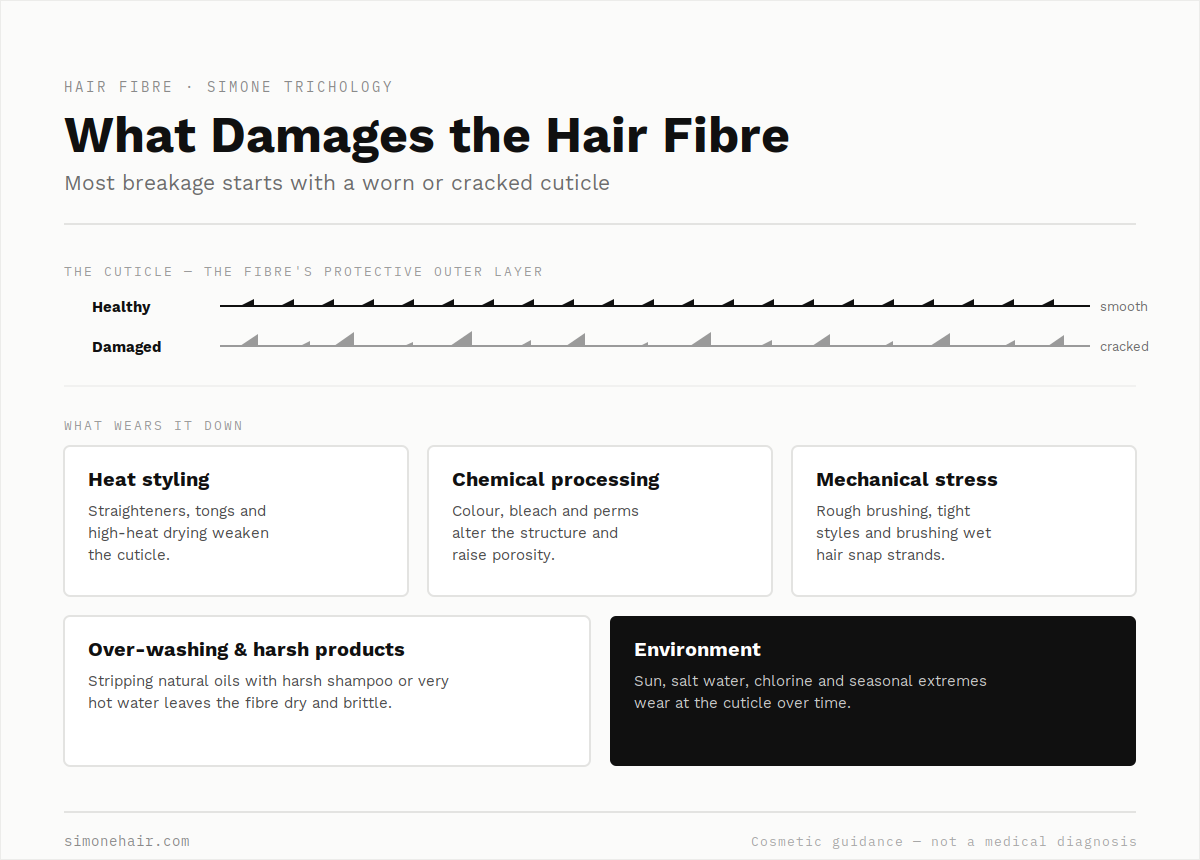
Each strand is built like a cable. The outer layer, the povrhnjica, is made of overlapping scales that protect the inner core. When the cuticle is smooth and intact, hair looks shiny and resists damage. When those scales lift, crack or wear away, the inner fibre is exposed — and that’s when hair becomes dry, rough, prone to split ends and liable to snap. Most breakage is, at its root, cuticle damage.
What causes hair to break
Toplotno oblikovanje
Straighteners, curling tongs and high-heat drying are among the biggest causes of fibre damage. Repeated high heat weakens the cuticle and the proteins beneath it, leaving hair brittle. Using heat protection and lower temperatures makes a real difference.
Kemična predelava
Colouring, bleaching, perming and relaxing all alter the hair’s internal structure, and each process leaves the fibre more porous and fragile. Bleaching is the most demanding of all. If your hair is coloured or lightened, it needs dedicated care — see our guide on caring for coloured and bleached hair (coming soon) and gentle, colour-safe routines.
Mehanski stres
Aggressive brushing, tight hairstyles, rough towel-drying and brushing wet hair (when it’s most vulnerable) all create tension that snaps strands. Elastic bands with metal parts and very tight ponytails are common offenders.
Over-washing or harsh products
Stripping the hair of its natural oils with harsh shampoos or very hot water leaves the fibre dry and brittle. Matching your washing routine to your hair is part of prevention — see how often to wash your hair.
How to repair and protect the fibre
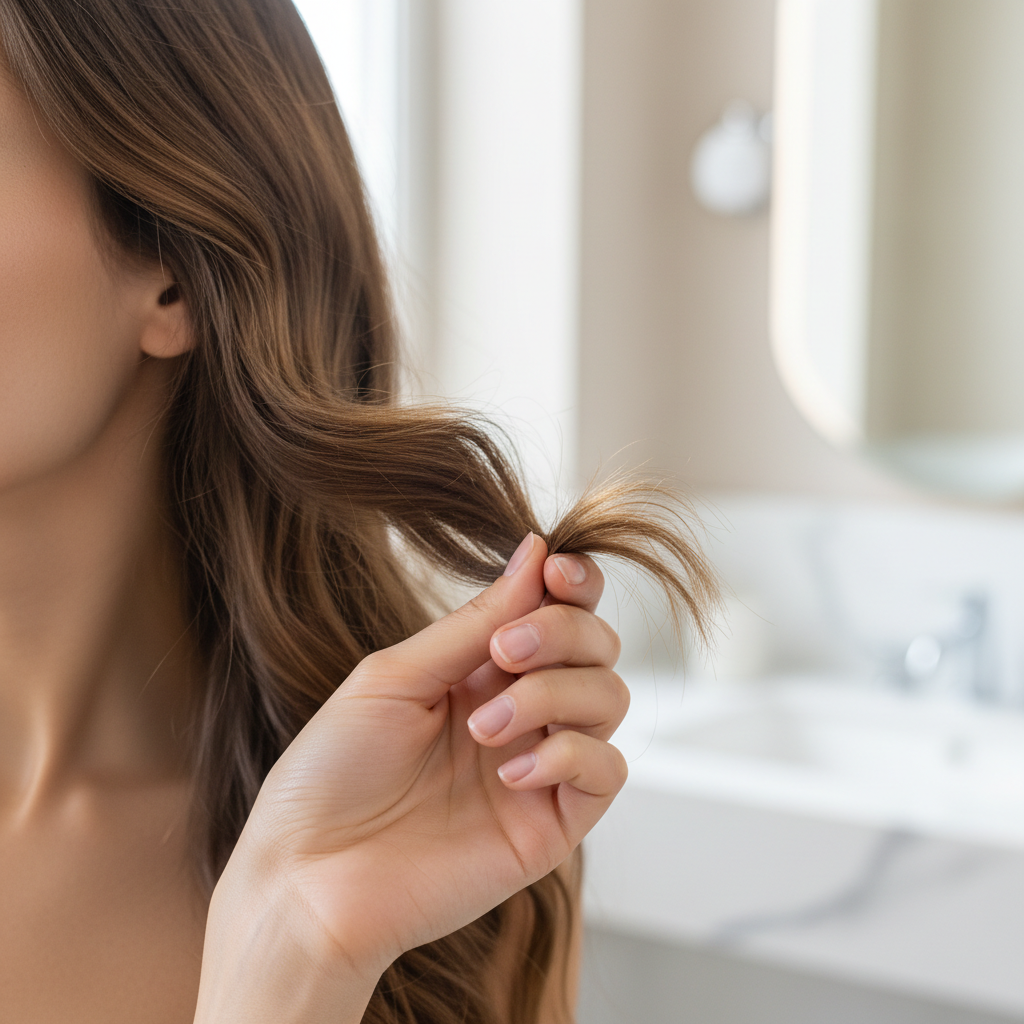
Damaged hair can’t be biologically “healed” — the strand is not living tissue — but its appearance, strength and feel can be significantly restored and protected with the right care:
- Restore the cuticle. Restructuring and conditioning treatments smooth the cuticle, improve strength and reduce the look of split ends.
- Replenish what’s lost. Hair benefits from care that helps reinforce its protein and moisture balance — the two things damage depletes.
- Reduce the stressors. Lower heat, gentler brushing, looser styles, sun and chlorine protection.
- Trim split ends. Once a strand splits, no product reseals it permanently — a trim prevents the split travelling further up.
- Be gentle with wet hair. Detangle with a wide-tooth comb, from the ends upwards.
SIMONE TRICHOLOGY's Bio-Repair, Moisture & Fibre Restructuring range is built specifically to restore and protect the hair fibre — smoothing the cuticle and supporting strength and moisture.
When breakage might point to something else
Most breakage is cosmetic and responds to better fibre care. But if hair is breaking suddenly and severely, breaking very close to the scalp, or comes with scalp symptoms or hair loss from the root, it’s worth having it assessed — occasionally breakage reflects an underlying issue rather than simple fibre damage.
Not sure if it's breakage or something else?
Telling breakage apart from shedding — and working out what’s damaging your fibre — is the key to fixing it. Our spletna klinika za lase offers a free, no-commitment pre-assessment: a few targeted questions about your hair, and personalised guidance on what’s going on and how to address it.
SIMONE TRICHOLOGY products are cosmetic products and are not intended to diagnose, treat, cure or prevent any medical condition. If you have a persistent or severe scalp or hair condition, please consult a healthcare professional.
