




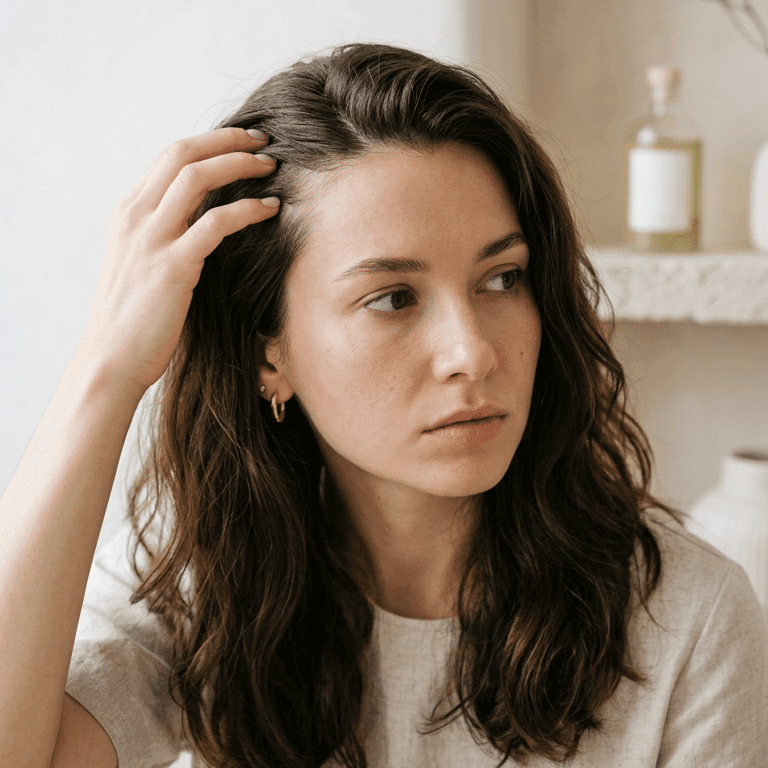
Can stress cause an itchy scalp? Stress can make scalp itching feel more intense, especially when the skin is already sensitive or affected by a condition such as dandruff, seborrhoeic dermatitis, eczema or psoriasis. It can also increase the urge to scratch, which may cause further irritation.
However, stress is not the only possible explanation. An itchy scalp can have several causes, so symptoms that are severe, persistent or accompanied by visible changes should not automatically be attributed to tension or anxiety.
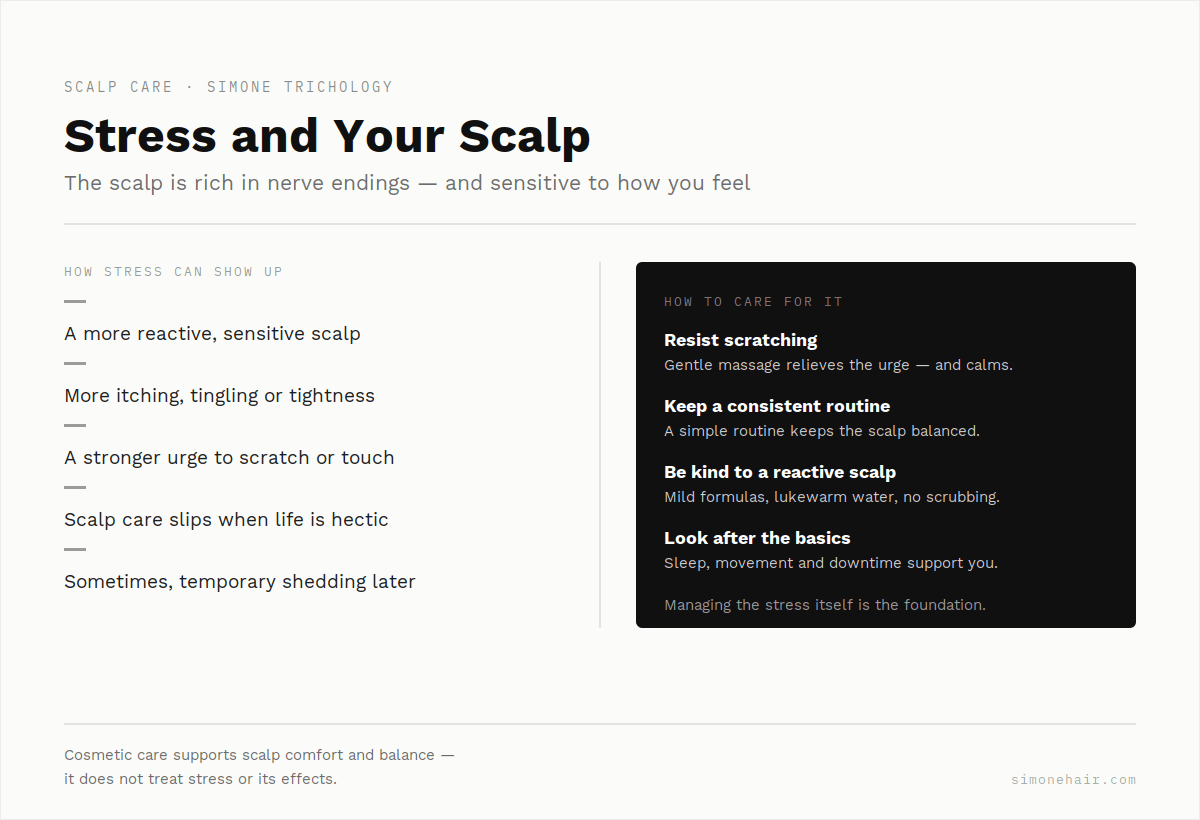
How stress can make scalp itching worse
Stress and itching can influence one another. During a demanding or emotionally difficult period, the nervous system may become more alert to uncomfortable sensations. An itch that would normally be easy to ignore can therefore feel more noticeable or harder to resist.
Stress may also affect the scalp indirectly:
- Greater sensitivity. Tingling, tightness or mild irritation may feel more prominent when you are tense or anxious.
- More touching and scratching. Some people touch, rub or scratch their scalp more frequently during stressful periods without realising it.
- Disrupted routines. Poor sleep, rushed washing, heat styling or neglecting regular scalp care can contribute to discomfort.
- Flare-ups of an existing condition. Stress can worsen itching associated with conditions such as eczema or psoriasis in susceptible people.
This means stress may be a trigger or amplifier, but the presence of stress does not rule out another scalp condition.
The itch–scratch cycle
An itchy scalp often creates a frustrating cycle. The discomfort prompts scratching, scratching irritates the skin, and the resulting irritation creates an even stronger urge to scratch. The discomfort itself can then increase stress and make the sensation more difficult to ignore.
Instead of scratching with your nails, try gently pressing or tapping the area, or applying a cool, damp cloth for a few minutes. Only massage the scalp gently if the skin is intact and there are no sores, bleeding, crusts or painful patches.
Other causes of an itchy scalp
Even when itching appears during a stressful period, another cause may be contributing. Common possibilities include:
- Dandruff or seborrhoeic dermatitis, which may cause flakes, oily scales, redness or irritation.
- A reaction to a hair product, particularly after introducing a new shampoo, styling product, colourant or treatment.
- Dry or irritated skin, sometimes aggravated by hot water, harsh cleansing or frequent heat styling.
- Eczema or psoriasis, which can produce persistent, inflamed or scaly areas.
- Head lice or a fungal infection, which require the correct diagnosis and appropriate treatment.
Our complete guide to an itchy scalp and its possible causes can help you understand the main differences, but it cannot replace an examination by a healthcare professional.
Can stress also cause hair shedding?
Significant emotional or physical stress can sometimes be followed by excessive hair shedding known as telogen effluvium. It often becomes noticeable a few months after the stressful event and is frequently temporary.
Hair shedding and scalp itching are separate symptoms. They may occur during the same stressful period, but that does not prove that they have the same cause. Sudden, patchy, progressive or persistent hair loss should be assessed by a doctor or dermatologist rather than assumed to be stress-related.
How to calm a stressed, itchy scalp
Addressing the source of stress supports overall wellbeing, while a simple and gentle routine can help avoid adding further irritation to the scalp:
- Avoid scratching. Pat, press or use a cool compress instead of scraping the skin with your nails.
- Use lukewarm water. Very hot water can leave already reactive skin feeling more uncomfortable.
- Wash gently. Use your fingertips rather than your nails and avoid aggressive scrubbing.
- Keep the routine simple. Introducing several new products at once makes it harder to identify a possible irritant.
- Review recent changes. Consider whether the itching began after using a new shampoo, colourant, styling product or treatment.
- Support healthy routines. Regular sleep, movement and periods of rest may help reduce stress, although they are not treatments for a scalp condition.
If a product appears to be making the itching worse, stop using it. Seek professional advice if the reaction continues or if you develop marked redness, swelling or discomfort.
Cosmetic care for scalp comfort
When the scalp is intact and the symptoms are mild, cosmetic care can support comfort and help maintain a balanced scalp environment. A reactive scalp generally benefits from gentle cleansing and a consistent routine rather than frequent changes or aggressive treatments.
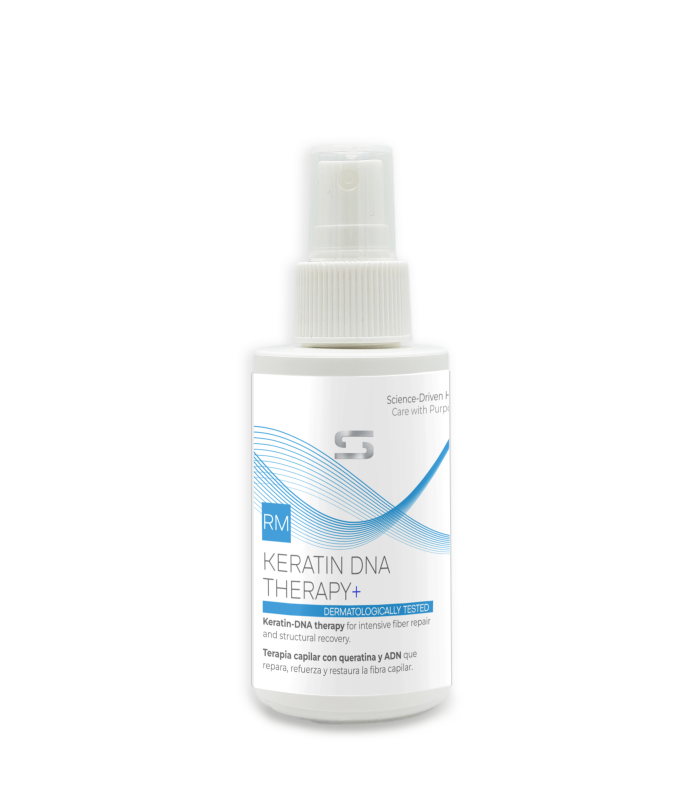
Read our guide to the causes and care of a sensitive scalp, or explore SIMONE TRICHOLOGY’s Scalp Oxygenation & Neuro-Balance range, developed with cosmetic scalp comfort and balance in mind.
If you are unsure which type of care suits your scalp, our online Hair Clinic offers a free, no-commitment preliminary assessment and personalised cosmetic care guidance. It does not replace a medical diagnosis.
When to see a professional
Speak to a doctor or dermatologist if the itching:
- is severe, repeatedly returns or affects your sleep or daily life;
- does not improve with gentle care;
- is accompanied by red or thick scaly patches, swelling, sores, bleeding, crusting, discharge or pain;
- appears together with sudden, patchy or progressive hair loss; or
- started after a product and is becoming increasingly uncomfortable.
Seek urgent medical help if a reaction to a hair product causes difficulty breathing or swelling of the face, lips, mouth or throat.
Frequently asked questions
Can anxiety make your scalp itch?
Anxiety and stress may make itching feel stronger or increase unconscious touching and scratching. However, another skin or scalp condition should be considered if the symptoms persist.
Does stress cause dandruff?
Stress is not the sole cause of dandruff. It may coincide with or worsen symptoms in some people, but flaking and inflammation can also have other causes that require suitable scalp care or medical assessment.
Why does my scalp itch when there are no flakes?
Possible explanations include sensitivity, dryness, a reaction to a product, eczema, psoriasis, head lice or another scalp condition. The absence of visible flakes does not confirm that stress is the cause.
Can stress cause itching and hair loss at the same time?
They can occur during the same period, but they are different symptoms. Stress-related excessive shedding generally appears after a delay, while scalp itching may have a separate dermatological or cosmetic cause.
Written by Pablo Ramos, founder and CEO of TRICHOMEDIC LABS and lead trichologist at SIMONE TRICHOLOGY, with more than 37 years of professional experience in hair and scalp care. Meet the trichologist →
Sources and further reading
- American Academy of Dermatology — Skin and hair conditions linked to stress
- American Academy of Dermatology — Hair loss and excessive hair shedding
- NHS — Itchy skin: self-care, possible causes and when to seek help
SIMONE TRICHOLOGY products are cosmetic products and are not intended to diagnose, treat, cure or prevent any medical condition, nor to treat stress or its effects. If you have a persistent or severe scalp condition, please consult a qualified healthcare professional.