



Traction Alopecia Treatment: How to Stop Hair Loss and Regrow Hair
Hair loss is never just a cosmetic concern. For many people, it also affects confidence, self-image, and daily wellbeing. At Simone Trichology, we understand that not all forms of hair loss are the same, and that is precisely why not all solutions should be the same either. When we talk about traction alopecia treatment, we are referring to a highly specific approach for a highly specific cause of hair loss: repeated tension placed on the hair and scalp.
Unlike other forms of alopecia, traction alopecia develops gradually due to hairstyles or habits that put continuous stress on the hair follicle. Tight ponytails, braids, extensions, buns, weaves, and certain styling routines may seem harmless at first, but over time they can weaken the follicle, inflame the scalp, and lead to visible thinning, especially around the hairline and temples.
At Simone Trichology, we believe that successful hair recovery begins with understanding the root cause. This is especially important because we do not focus on one single form of alopecia. We specialize in treatments for different types of hair loss, always with a professional, personalized, and scalp-focused approach. In the case of traction alopecia, acting early is essential. When addressed promptly, hair recovery may be possible. When ignored for too long, follicular damage can become much more difficult to reverse.
In this article, we will explain what traction alopecia is, how to identify it, what makes it worse, and which professional strategies can help stop the process and support regrowth. We will also answer one of the most searched questions on the subject: can traction alopecia be reversed?
What Is Traction Alopecia and Why Does It Happen?
Traction alopecia is a type of hair loss caused by persistent pulling or tension on the hair shaft and scalp. It is not usually the result of hormones, genetics, or autoimmune activity. Instead, it develops from external mechanical stress that gradually damages the follicles.
This condition often begins subtly. At first, we may only notice a little more breakage, slight discomfort after styling, or a mild reduction in density along the edges. Because these signs can seem minor, many people do not react in time. However, repeated tension can trigger progressive weakening of the follicle, scalp sensitivity, and eventually permanent hair loss if the stress continues over months or years.
For this reason, at Simone Trichology we always emphasize a key principle: before choosing a treatment, we must understand the cause of the alopecia. A person with traction alopecia does not need the same protocol as someone with androgenetic alopecia, diffuse thinning, or inflammatory scalp disorders. The origin of the problem determines the logic of the solution.
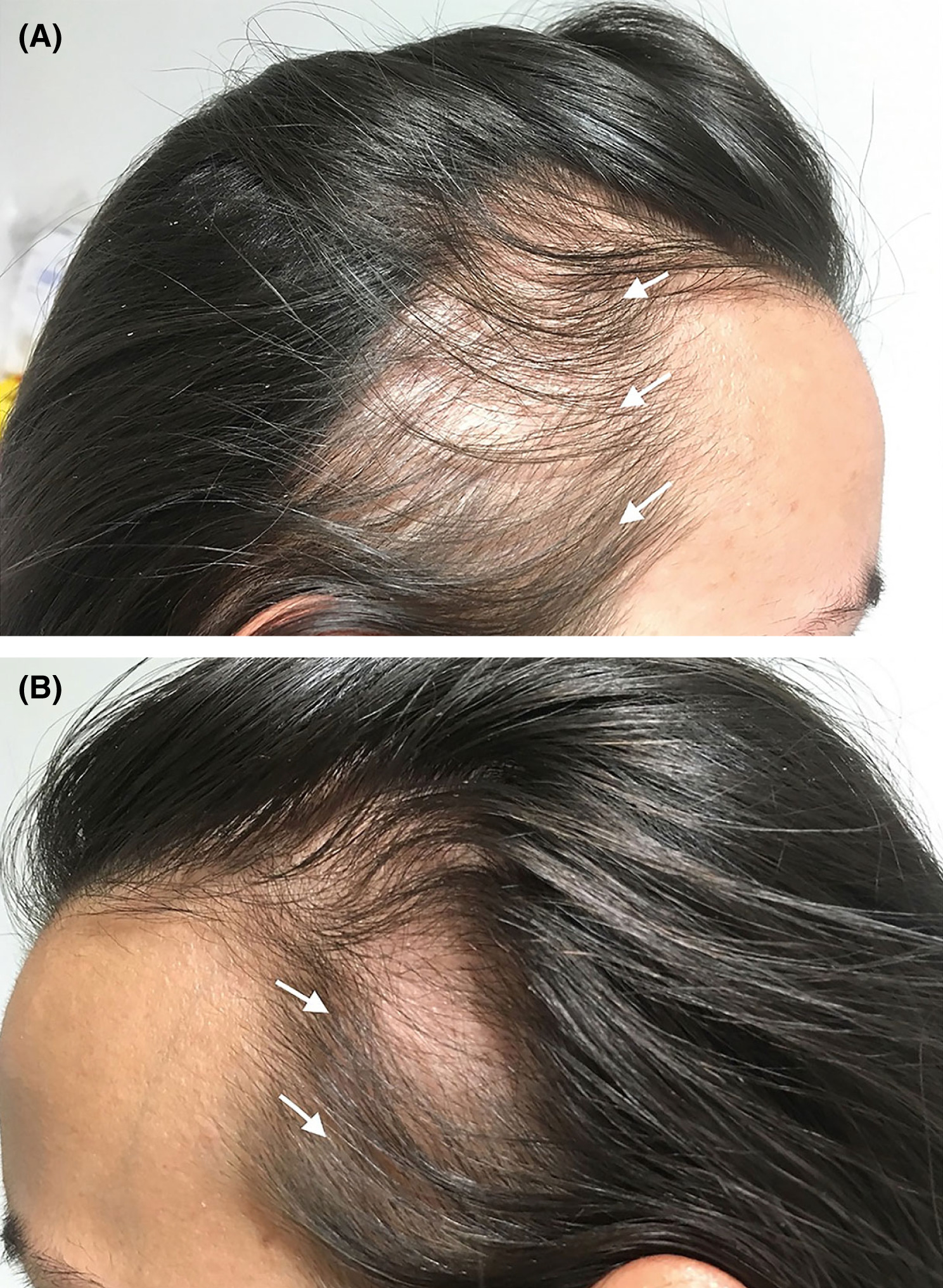
Common Causes of Traction Alopecia
Several styling habits may contribute to traction alopecia, especially when they are repeated frequently without allowing the scalp to recover. Common triggers include:
- Tight ponytails
- Braids and cornrows installed with excessive tension
- Heavy hair extensions
- Weaves and sew-ins
- Tight buns worn daily
- Aggressive brushing of the hairline
- Constant use of tight headwear over already tensioned hair
- Styling baby hairs with repeated pulling and friction
At Simone Trichology, we see an important pattern again and again: many people do not realize the damage until thinning is already visible. That is why prevention and early intervention are such an important part of any effective traction alopecia treatment plan.
Early Signs We Should Not Ignore
In its early phase, traction alopecia often gives warning signs before major hair loss appears. These signs may include:
- Tenderness after wearing certain hairstyles
- A tight or sore scalp
- Small broken hairs around the frontal area
- Reduced density at the temples
- Redness, itching, or mild irritation
- Tiny bumps around the follicles
- A receding hairline that seems linked to styling habits
These symptoms matter because early traction alopecia is usually much more manageable than advanced traction-related hair loss. The sooner we reduce the stress placed on the follicles, the better the chances of protecting them.
Why Proper Diagnosis Matters Before Starting Any Treatment
One of the biggest mistakes in the hair loss market is assuming that every form of hair thinning can be treated with the same generic product. At Simone Trichology, that is not our philosophy. We work from the understanding that the scalp and the follicle require a targeted and individualized approach.
A person may believe they have traction alopecia when, in reality, they are also dealing with hormonal thinning, seasonal shedding, inflammation, or a mixed form of alopecia. That is why professional evaluation is so valuable. When hair loss is approached without identifying the cause, people often waste time on ineffective solutions while the condition continues to progress.
For us, traction alopecia treatment should always begin with proper assessment. We need to evaluate not only the hair itself, but also the scalp condition, the history of styling tension, the duration of hair loss, and the current state of the follicles. This is what allows a treatment plan to be coherent rather than generic.
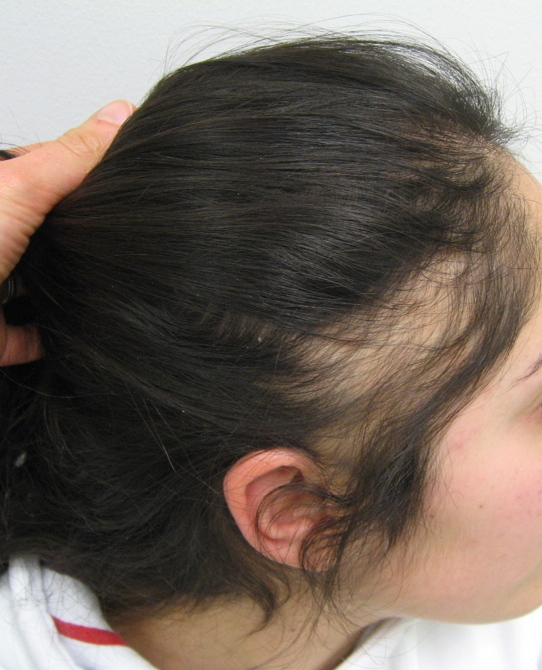

Traction Alopecia Treatment Requires More Than a Single Product
There is no miracle formula that can compensate for constant mechanical damage. This is one of the most important truths we communicate to clients. If tension remains part of the routine, even the best scalp care protocol will struggle to deliver meaningful improvement.
That is why, at Simone Trichology, we approach traction alopecia from multiple angles:
- reducing the source of tension,
- restoring scalp balance,
- supporting follicular resilience,
- improving the hair environment,
- and selecting the most suitable professional treatment protocol according to the individual case.
This broader vision is especially important because we are not simply selling hair products. We are dedicated to solutions for different alopecias, and that requires a more serious and specialized perspective.
Why a Personalized Hair Loss Strategy Makes a Difference
A personalized strategy matters because no two cases are exactly alike. One person may have early-stage thinning with a reactive scalp. Another may show chronic traction damage combined with weakness in the hair fiber. Another may have longstanding hairline recession where the follicles have already been compromised.
For this reason, Simone Trichology positions hair recovery as a process based on observation, adaptation, and consistency. In our view, a professional traction alopecia treatment should support both the scalp and the follicle, rather than focusing only on the visible hair strand.
Traction Alopecia Treatment: The Professional Approach We Recommend
When discussing traction alopecia treatment, many people expect a quick fix. However, effective recovery usually requires a structured process. At Simone Trichology, we recommend a disciplined approach focused on the real biology of the problem, not on marketing promises.
Traction Alopecia Treatment Starts by Eliminating Tension
This is the first and most important step. If the follicle continues to experience repeated pulling, no treatment strategy can perform at its full potential. We must first remove or significantly reduce the cause of tension.
This means avoiding or modifying:
- tight ponytails,
- tight buns,
- highly tensioned braids,
- heavy extensions,
- aggressive edge styling,
- and any hairstyle that causes pain, tightness, or scalp sensitivity.
At Simone Trichology, we consider this a non-negotiable starting point. Too often, people continue damaging their follicles while simultaneously searching for regrowth products. In reality, stopping the traction is part of the treatment itself.

Scalp Recovery Is Essential for Follicular Health
Once tension is reduced, the next priority is restoring a healthier scalp environment. A stressed follicle usually exists within a stressed scalp. That is why we do not see hair regrowth as a hair-only issue. We see it as part of a broader trichological framework.
A professional scalp-focused routine may aim to:
- reduce irritation,
- keep the scalp clean and balanced,
- improve comfort in sensitized areas,
- support the follicular environment,
- and reinforce healthier conditions for new hair growth.
This is one of the areas where Simone Trichology brings real value. We are dedicated to treatments that take the scalp seriously, because healthy hair begins where hair grows. For people with traction alopecia, that principle is especially important.
Why Our Treatments Are Designed for Different Types of Alopecia
Although this article focuses on traction alopecia, our philosophy goes beyond one single condition. At Simone Trichology, we work with the understanding that hair loss has many forms and many triggers. Some are mechanical. Some are hormonal. Some are reactive. Some are linked to scalp imbalance. For this reason, we offer treatments oriented toward different alopecias, not a one-size-fits-all answer.
This matters because a client looking for traction alopecia treatment is often also looking for trust, expertise, and a brand that understands the bigger picture. We believe that hair recovery should be approached with precision. That is why our work is grounded in scalp care, follicular support, and treatment logic based on the real nature of the hair loss.
The Importance of Consistency in the Recovery Process
Even the most suitable treatment protocol requires consistency. Hair growth is gradual. Follicular recovery is gradual. Scalp rebalancing is gradual. That means visible changes often take time, especially when the follicles have been under stress for a prolonged period.
At Simone Trichology, we encourage a realistic but optimistic perspective. Improvement is often linked to:
- acting early,
- following the protocol consistently,
- avoiding repeated traction,
- maintaining supportive scalp care,
- and using the correct treatment approach for the specific form of alopecia.
Can Traction Alopecia Be Reversed?
“Yes, traction alopecia can often be reversed in early stages if the tension is removed quickly and the scalp receives the right care. In advanced cases, long-term follicular damage may reduce the chances of regrowth.”
This is one of the most important questions for anyone searching for answers: can traction alopecia be reversed?
The answer depends largely on timing. In early stages, when the follicle has been weakened but not permanently destroyed, improvement and regrowth may be possible if the tension is removed and the scalp is treated appropriately. In more advanced cases, especially when traction has persisted for a long time, recovery becomes more limited because the follicle may no longer be able to produce healthy hair.
At Simone Trichology, we believe it is essential to communicate this honestly. False promises do not help the client. What does help is early action, correct diagnosis, and a treatment plan based on the real condition of the scalp and follicular structure.
Signs That Recovery May Still Be Possible
Although every case is different, some signs may suggest that traction alopecia is still in a recoverable phase:
- the thinning is relatively recent,
- there are still fine or short hairs in the affected area,
- the scalp is not smooth or shiny,
- the follicles do not appear completely inactive,
- the loss clearly corresponds to areas of repeated tension.
In these cases, a professional and timely response can make a meaningful difference. This is why we always recommend addressing the issue as soon as the first changes appear.
When the Condition Has Progressed Too Far
When traction alopecia is longstanding, the affected areas may begin to look smoother, more depleted, and less responsive. In such cases, the follicles may already be severely compromised. Even then, proper evaluation remains valuable because it helps define realistic expectations and the most suitable course of action.
At Simone Trichology, we understand that every case deserves serious attention. Whether the goal is prevention, scalp improvement, follicular support, or a broader hair recovery protocol, the first step is always to evaluate the situation properly rather than relying on assumptions.
How Simone Trichology Positions Traction Alopecia Treatment Within a Broader Hair Loss Strategy
At Simone Trichology, we do not view traction alopecia in isolation. We see it as part of a larger trichological landscape in which the scalp, follicle, styling habits, and individual history all matter. That is why our approach is not limited to symptom-based care. We aim to support the conditions that allow healthier hair development over time.
For clients looking for traction alopecia treatment, this broader perspective is valuable because it connects short-term action with long-term hair care. It is not only about stopping damage. It is also about creating a routine and treatment environment that supports stronger, healthier, and more resilient hair in the future.
What We Want Clients to Understand
The most important message we want to communicate is this: not every alopecia should be treated in the same way. If the cause is traction, the treatment must reflect traction. If the cause is another form of alopecia, the protocol must reflect that. Precision matters. Professional scalp care matters. Follicular health matters.
That is the foundation of Simone Trichology’s identity. We are dedicated to hair and scalp solutions with a specialized view of alopecia, and we believe that informed treatment decisions lead to better outcomes than generic recommendations.
Frequently Asked Questions
The best traction alopecia treatment is one that addresses the actual cause of the hair loss. In most cases, this means eliminating tension, improving scalp conditions, and following a professional treatment strategy adapted to the state of the follicle and the scalp. At Simone Trichology, we always recommend a personalized approach rather than a generic solution.
Yes, in many early cases, traction alopecia may improve when the tension is removed promptly and the scalp receives the right care. This is why acting at the first signs of thinning or discomfort is so important. The earlier we intervene, the better the chances of preserving follicular activity.
Professional assessment matters because not all hair loss around the hairline is caused by traction alone. Some people experience mixed patterns of alopecia or scalp imbalance. At Simone Trichology, we believe that identifying the real cause is essential for selecting the right treatment protocol and avoiding ineffective solutions.
Conclusion
Traction alopecia treatment should never be approached as a superficial beauty issue. It is a matter of follicular health, scalp balance, and early intervention. At Simone Trichology, we understand that repeated tension can progressively compromise hair growth, which is why we advocate a professional and personalized response from the earliest signs.
We also know that this condition should not be viewed in isolation. As specialists in treatments for different types of alopecia, we believe that every case of hair loss deserves an approach based on cause, scalp condition, and recovery potential. In the case of traction alopecia, that means stopping the damaging habits, supporting the scalp, and applying the most suitable treatment logic as early as possible.
For anyone asking can traction alopecia be reversed, our answer is clear: in many cases, improvement is possible, especially when the problem is identified early and treated with consistency and expertise. That is why, at Simone Trichology, we place so much importance on specialized care, individualized assessment, and treatments designed to support healthier hair from the scalp outward.