

What kind of technique or treatment is there for alopecia areata?
Understanding alopecia areata
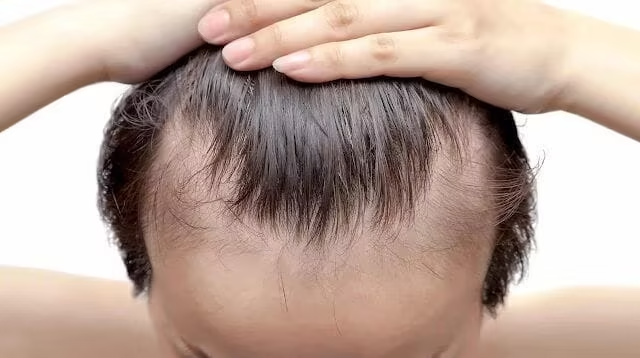
Alopecia areata is a non-scarring hair loss condition in which the immune system mistakenly targets hair follicles. It often appears as one or several well-defined round or oval patches without hair, usually on the scalp, although other hair-bearing areas such as the beard or eyebrows may also be affected.
The exact cause is not fully understood. A combination of genetic predisposition and immune factors is believed to play a role. In some people, the appearance or worsening of patches may coincide with periods of stress, psychological strain or intercurrent illnesses, but this does not mean that stress is the sole cause.
The course of alopecia areata can be very variable. Some patches may regrow spontaneously, while in other cases the condition can be more persistent or extensive. For this reason, a correct diagnosis and individual evaluation are essential before planning any treatment.
Why professional diagnosis is essential
Hair loss in patches is not always due to alopecia areata. Other conditions, including certain infections, inflammatory diseases or scarring alopecias, can also cause localised hair loss. Treating the wrong problem may delay appropriate care.
Clinical assessment and tests
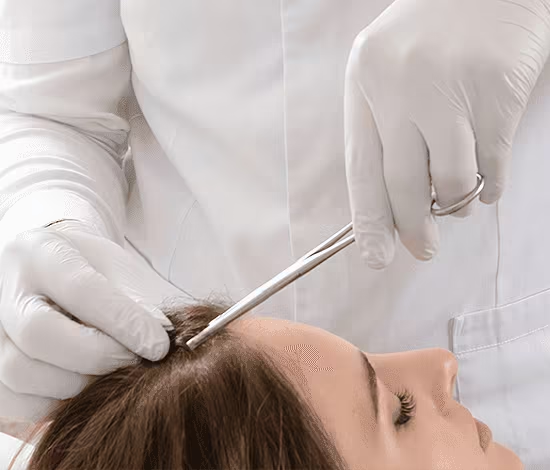
In most cases, diagnosis begins with a detailed clinical history and examination of the scalp and hair. A professional may use tools such as dermoscopy (trichoscopy) to observe characteristic patterns in the follicles and surrounding skin. In selected cases, other tests may be requested, for example to rule out additional conditions or to clarify the diagnosis.
Because alopecia areata can sometimes be associated with other autoimmune conditions, a specialist will consider your overall health status and symptoms, not only the visible patches.
Visiting an authorised Simone Trichology hair centre or a dermatologist with experience in hair disorders allows your specific case to be properly assessed and monitored over time.
Medical and topical treatment approaches
There is no single technique that suits all patients with alopecia areata. Treatment choices depend on the extent and location of hair loss, duration, age, general health and expectations.
Topical and intralesional therapies
Commonly used medical approaches, always under professional supervision, may include:
- Topical corticosteroids, applied to affected areas to dampen the local immune reaction.
- Intralesional corticosteroid injections, particularly in adults with limited patches, to deliver the medication more directly around hair follicles.
- Topical immunotherapy, in certain specialised centres, using contact agents designed to modify the local immune response on the scalp.
- Adjunctive topical treatments, such as solutions aimed at supporting hair growth, may be used in combination in some cases as part of an overall plan.
The choice, strength and frequency of these treatments must always be determined by the prescribing doctor or specialist, taking into account potential benefits and side effects.
Systemic treatments in selected cases
For more extensive or resistant alopecia areata, dermatologists may consider systemic therapies. These options are carefully weighed, as they can have broader effects on the immune system and require strict medical follow-up. Not all patients are candidates for systemic treatment, and the decision is individual.
Supportive care and realistic expectations
Alongside medical techniques, supportive care of the scalp and hair, together with psychological support when needed, can form an important part of management.
Scalp and hair care
Using appropriate shampoos and avoiding excessive traction, harsh chemical procedures and unnecessary irritation can help maintain a healthier environment for the scalp. While these measures do not replace medical treatment, they support overall hair and scalp condition.
Emotional and practical support
Living with alopecia areata can have a significant emotional impact. Some people benefit from practical options such as cosmetic camouflage, styling advice or the use of hair prostheses in more extensive cases. Talking with professionals who understand the condition can help manage expectations and concerns in a realistic, empathetic way.
When to visit an authorised Simone Trichology centre
Because alopecia areata behaves differently from person to person, the most advisable step is to have your case evaluated individually.
An authorised Simone Trichology hair centre can:
- assess whether your hair loss fits the pattern of alopecia areata or another condition
- review your history and possible triggering or associated factors
- explain which medical or topical options may be appropriate in your situation
- guide you on scalp care, follow-up and when referral to a dermatologist is needed
If you have noticed round or oval patches of hair loss, or changes that you do not recognise as “normal shedding”, it is recommended that you seek professional advice rather than starting treatments on your own. Early and accurate evaluation is key to selecting the most suitable approach for your case.
