






If you have flakes on your scalp, your instinct is probably to reach for the first anti-dandruff shampoo you can find. But dandruff is not one single thing — and using the wrong type of product can leave your scalp worse than before. The first step that actually makes a difference is knowing whether your dandruff is dry or oily. In the UK, our anti-dandruff shampoo and scalp care.
Here is how to tell them apart, why it matters, and how a trichology-led routine approaches each one.
What dandruff actually is
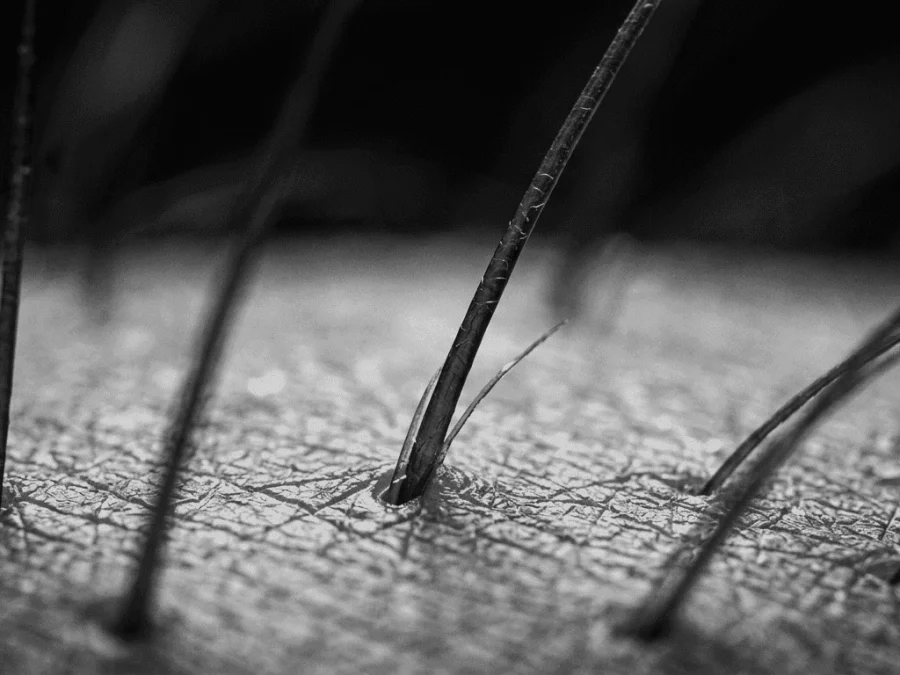
Dandruff is the visible result of the scalp shedding skin cells faster than usual. A healthy scalp renews itself quietly, in flakes too small to notice. When that cycle speeds up, the flakes clump together and become visible.
One factor commonly involved is Malassezia, a yeast that lives naturally on everyone’s scalp. In some people it can contribute to irritation and an accelerated flaking cycle. This is normal scalp biology — not a sign that anything is seriously wrong — but it does mean dandruff responds best to care that addresses the scalp environment, not just the flakes themselves.
Trichologists generally distinguish two broad presentations: dry dandruff and oily dandruff. They look different, feel different, and need different care. For the full picture — including the inflammatory and chronic forms — see our trichology guide to the types of dandruff and desquamative processes.
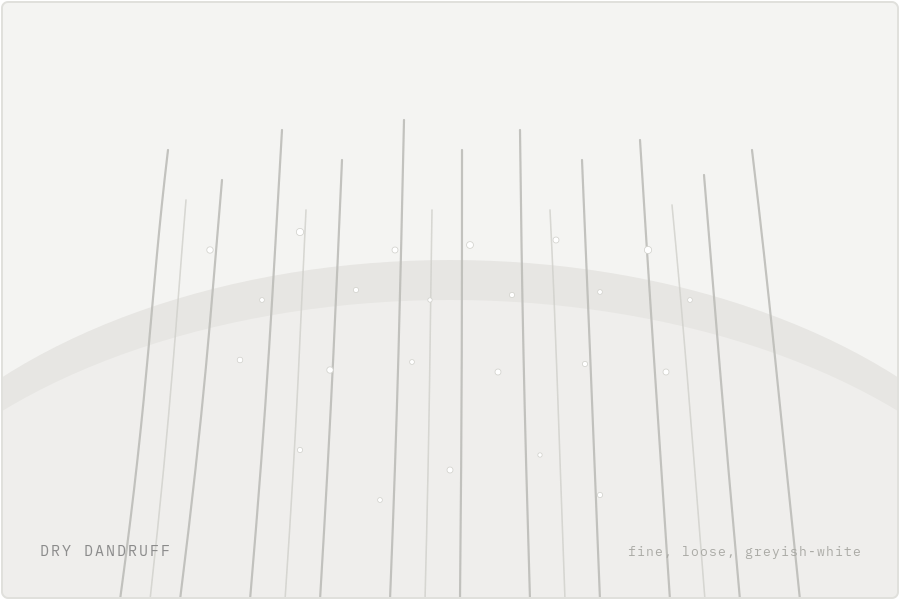
Dry dandruff (pityriasis simplex) is
This is the type most people picture. The signs usually include:
- Small, fine flakes that are greyish-white and loose
- Flakes that fall easily onto shoulders and clothing
- A scalp that often feels dry or tight, sometimes itchy
- Hair that tends to look matte rather than greasy
Dry dandruff is often linked to a scalp that lacks moisture and comfort. Harsh shampoos, very hot water, cold dry air and over-washing can all make it more noticeable. The instinct to scrub harder usually backfires — it strips the scalp further and keeps the cycle going.
Oily dandruff (pityriasis steatoides)
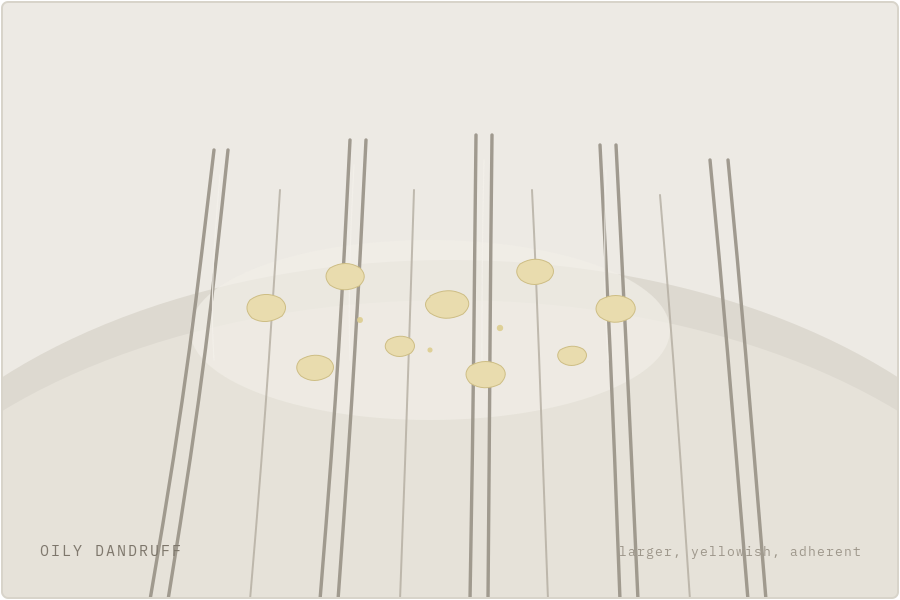
Oily dandruff looks and behaves quite differently:
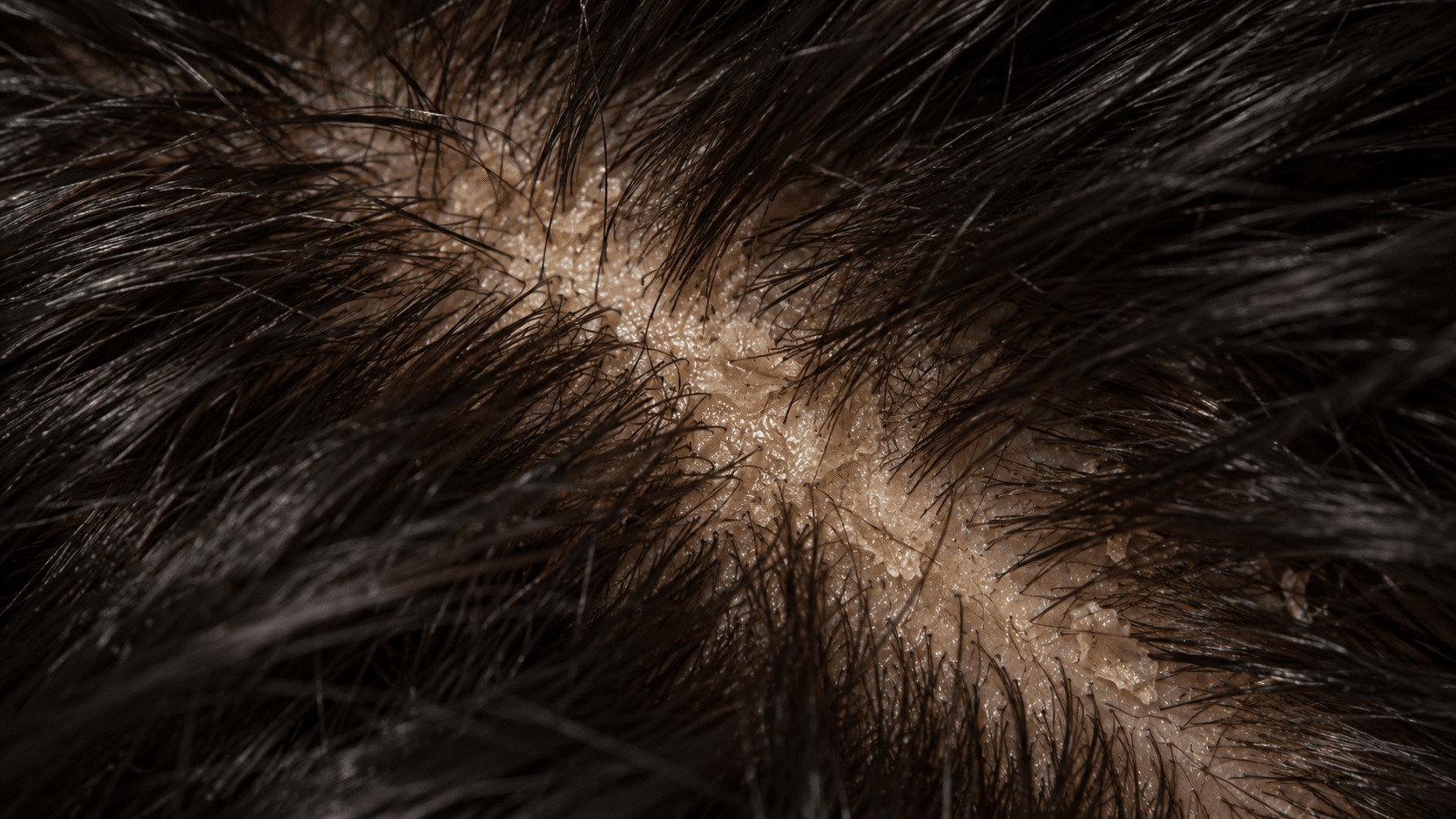
- Larger flakes that are yellowish and tend to stick to the scalp and hair
- A scalp that feels greasy or heavy, sometimes with an odour
- Flakes that don’t fall away easily because they cling to oil
- Often appears alongside an oily, seborrhoeic scalp
Here, excess sebum and the scalp microbiome are the bigger part of the picture. Using a rich, moisturising product made for dry scalps will usually make oily dandruff worse, because it adds to a scalp that already has too much oil.
A quick self-check
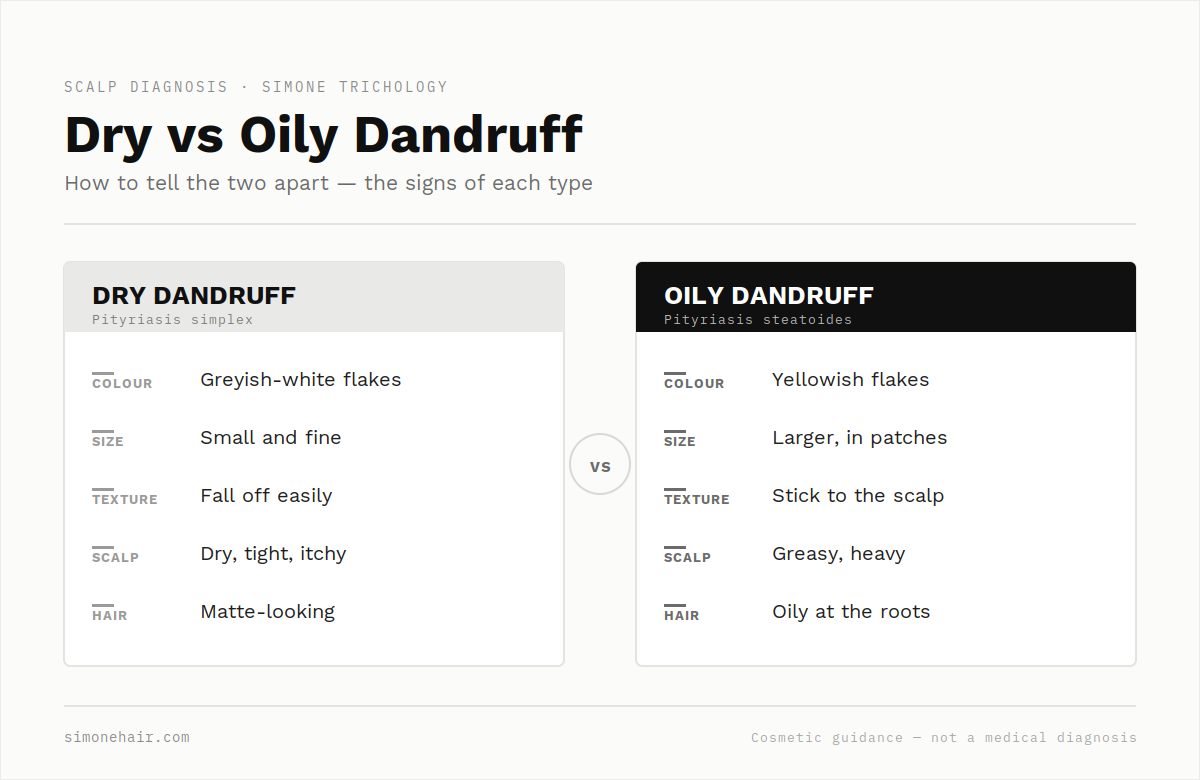
Not sure which one you have? This simple comparison helps:
| Look for | Dry dandruff | Oily dandruff |
|---|---|---|
| Flake colour | Greyish-white | Yellowish |
| Flake size | Small, fine | Larger, in patches |
| Do they fall off? | Yes, easily | No, they stick |
| Scalp feel | Dry, tight, itchy | Greasy, heavy |
| Hair look | Matte | Oily at the roots |
If your scalp shows a mix of both, or the picture isn’t clear, that’s exactly the kind of case worth having looked at properly rather than guessing.
Why getting the type right matters
The two types respond to almost opposite approaches. A dry scalp needs gentle cleansing and restored comfort and moisture. An oily scalp needs balanced cleansing that manages sebum without stripping. Treat dry dandruff with an aggressive oil-control product and you irritate it further; soothe oily dandruff with a heavy moisturising mask and you feed the problem. Matching the routine to the type is what changes results.
How a trichology-led routine approaches dandruff
A trichology approach starts from the scalp environment rather than from the flakes alone. The aim is to restore a comfortable, balanced scalp so the flaking cycle settles — gentle, well-matched cleansing for dry dandruff, and sebum-balancing care for oily dandruff, with attention to the scalp microbiome in both cases.
SIMONE TRICHOLOGY’s Clinical Dandruff & Microbiome Care range is built around this idea — formulas designed to care for the scalp environment rather than simply mask the symptom. The right combination depends on whether your scalp leans dry or oily, which is why identifying your type first is so useful.
Once you know your type, each one has a complete SIMONE routine. For fine, loose, greyish-white flakes on a dry, tight scalp, the Dry Dandruff Routine combines a pre-wash scalp mask, an anti-dandruff shampoo, a moisturising shampoo and the Dandruff Balance leave-in. For yellowish flakes that stick to an oily scalp, the Oily Dandruff Routine adds sebum-balancing care to the anti-dandruff steps. Both come as a complete kit, for less than buying each product separately.
Washing habits matter too — see our guide on how often to wash your hair by scalp type.
When dandruff might be more than dandruff
Most dandruff is a dermocosmetic scalp concern. But some signs are worth showing to a doctor or dermatologist rather than treating at home, including: well-defined red or scaly patches, persistent itching that disrupts sleep, bleeding or sore areas, or flaking that doesn’t improve with appropriate scalp care. Conditions such as seborrhoeic dermatitis or scalp psoriasis can look like dandruff but need medical assessment. If anything about your scalp feels beyond ordinary flaking, an in-person check is the safe route. A sensitive or reactive scalp is also worth approaching gently.
Not sure which type you have?
If you’d like a clearer picture before choosing a routine, our specialists can help. Our online Hair Clinic offers a free, no-commitment pre-assessment: you answer a few targeted questions about your hair and scalp, and receive guidance pointing you towards the right approach for your specific scalp type — dry, oily or in between.
Dandruff is one of several scalp concerns. For the full picture, see our guide to scalp health.
SIMONE TRICHOLOGY products are dermocosmetic products and are not intended to diagnose, treat, cure or prevent any medical condition. If you have a persistent or severe scalp condition, please consult a healthcare professional.