




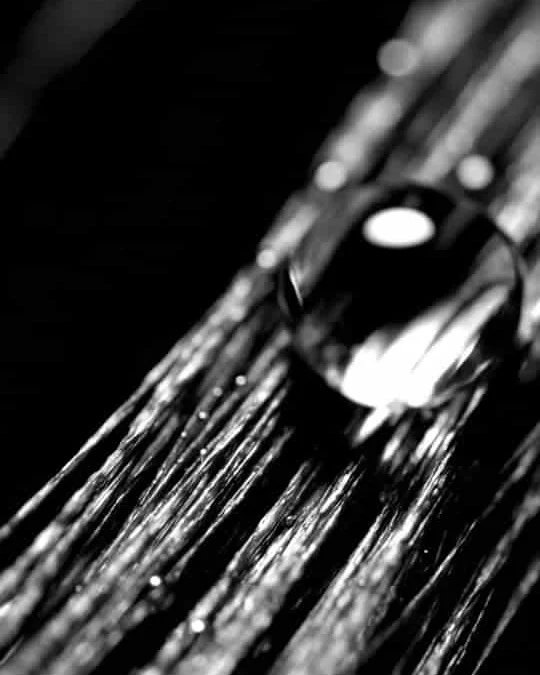


In short: a hair shaft has three layers: the cuticle (outer protective scales), the cortex (the thick keratin layer that provides strength, elasticity and color) and the medulla (the innermost central core, often absent or fragmented in fine hair). Below the skin, the living root — follicle and bulb — builds the fiber; above it, the shaft is no longer alive and cannot repair itself.
Understanding hair structure is the starting point of trichology. Once you know what the cuticle, cortex and medulla do, it is easier to see why hair shines or looks dull, why it stretches or snaps, and why some damage is reversible and some is not.
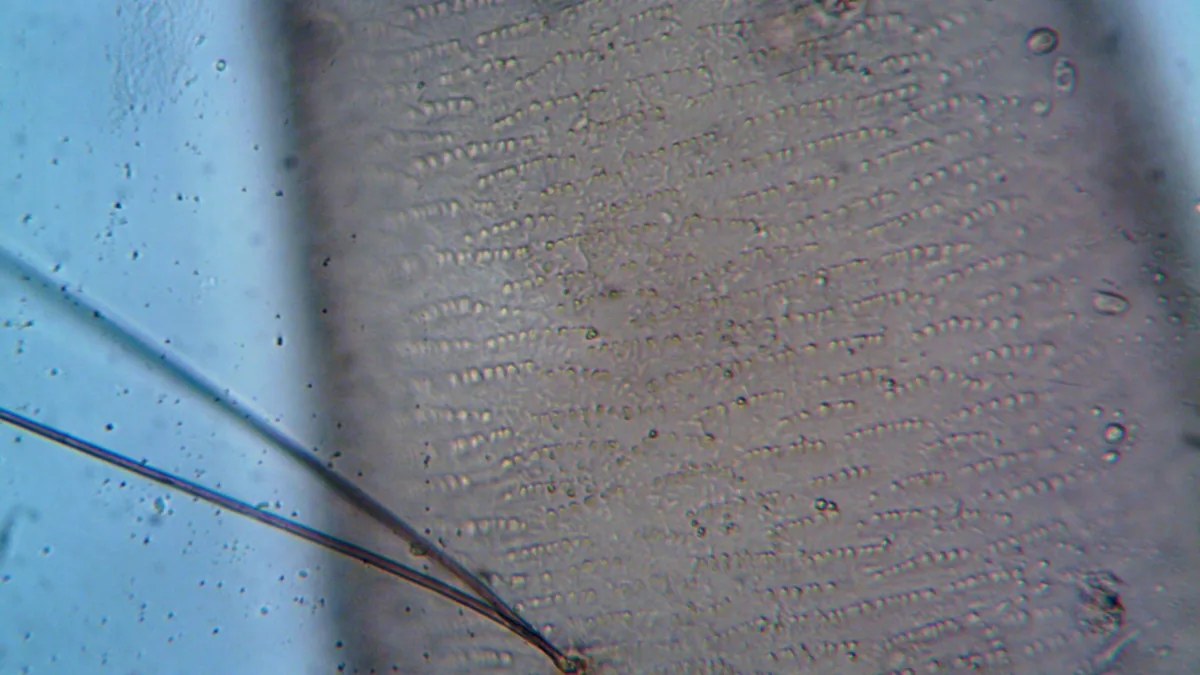
What are the three layers of a hair shaft?
From the outside in, the three parts of a hair shaft are the cuticle, the cortex and the medulla. In cross-section, a hair resembles a tree trunk: protective bark outside, dense wood in the middle and a soft central core.
- Cuticle: the outer layer of flat, overlapping scales that point toward the tip. It protects the fiber and is responsible for shine and smoothness.
- Cortex: the thick middle layer, which makes up most of the fiber. It holds the keratin that gives hair strength and elasticity and the melanin that gives it color.
- Medulla: the innermost central core, a loose column of cells and air spaces. It is often absent, discontinuous or fragmented in fine hair and more likely to be present in thick or coarse hair.
This article is a chapter of our beginner’s guide to the hair: what it is and how it is built, which also covers the hair cycle and scalp biology.
Root vs shaft: follicle, bulb and the part you can see
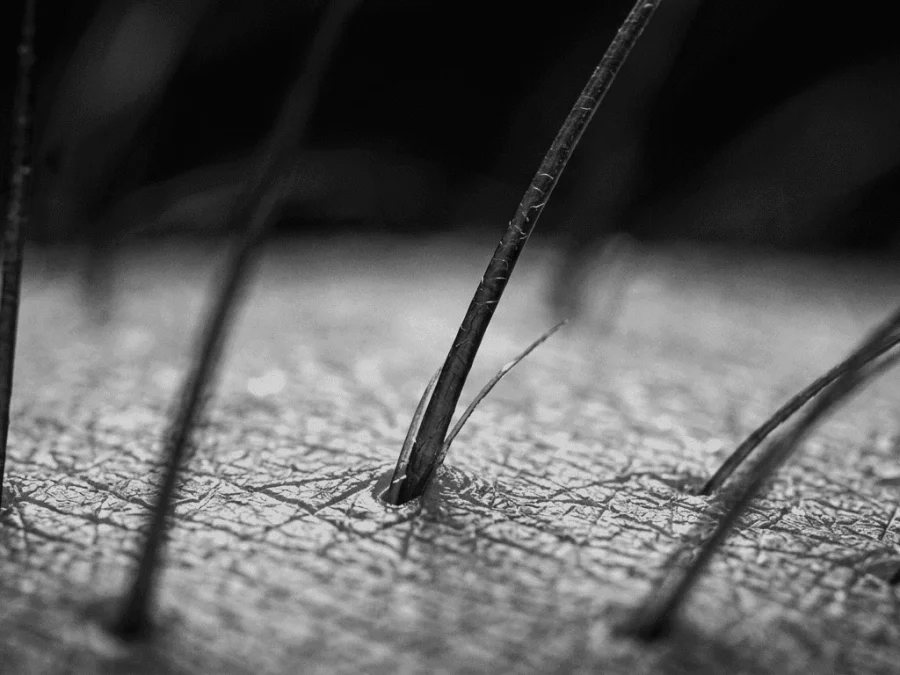
A hair has two regions. The root lies below the skin, inside the hair follicle, a small tunnel reaching down into the dermis. At its base sits the bulb, where cells divide rapidly and are pushed upward. As they rise, they fill with keratin, lose their nucleus and harden into the layered structure above, a process called keratinization.
The shaft is the part that emerges from the skin. Its keratinized cells are no longer alive: no blood supply, no nerves, no capacity for repair. Whatever happens to it — heat, friction, chemicals, sun — stays until that section is cut off. The only living part of a hair is the root, where nutrition, hormones and the hair cycle act.
The cuticle: the protective outer layer
The cuticle consists of several layers of thin, transparent, overlapping scales arranged like roof tiles, pointing from root to tip. It contains no pigment; the color you see comes from the cortex underneath. A thin lipid layer on its surface helps repel water and keeps the scales flat.
When the scales lie flat, light reflects evenly: hair looks shiny, feels smooth and resists tangling. When they are lifted, chipped or worn away, hair looks dull, tangles easily and holds moisture poorly. This is where everyday damage — brushing, heat, friction, sun, chlorine — shows up first.
The cortex: keratin, strength and color
The cortex is the heart of the hair fiber: elongated cells packed with keratin, a fibrous protein built from long chains of amino acids. Keratin chains are bundled into fibrils, and fibrils into larger bundles, giving hair a rope-like internal architecture. This is what makes a single hair remarkably strong for its thickness and lets it stretch and return to its original length.
Disulfide bonds and other bonds in keratin
Several types of chemical bonds hold the keratin chains together:
- Disulfide bonds are strong, permanent links between sulfur atoms of the amino acid cysteine. They give hair its shape and resilience and are not broken by water. Permanent waving, straightening and relaxing work by deliberately breaking and re-forming them.
- Hydrogen and salt (ionic) bonds are weak and temporary. Hydrogen bonds break when hair gets wet and re-form as it dries, which is why hair can be reshaped with a blow-dryer and why that shape fades in humidity.
Our companion article on whether dyeing hair is a chemical change explains what coloring and bleaching do to these bonds.
Melanin: where hair gets its color
Hair color comes from melanin, pigment granules produced by melanocytes in the bulb and deposited into the cortex as the fiber forms. Eumelanin gives brown and black tones, pheomelanin red and yellow tones; their ratio and amount set the natural shade. As melanin production declines with age, hair turns gray or white. The cuticle has no pigment of its own, so bleach must pass through it to lighten the melanin inside.
The medulla: the innermost central core
The medulla is the central core of the hair shaft: loosely packed cells with air spaces between them. Its role in human hair is not fully understood, and it varies even between hairs on the same head. It is frequently absent, discontinuous or fragmented in fine hair and more consistently present in thick, coarse hair. It does not appear to determine strength, which depends mainly on the cortex.
How damage affects the hair structure, layer by layer
Damage usually progresses from the outside in, which helps judge how far it has gone:
- Cuticle damage. Scales lift, chip and eventually wear away under friction, heat, UV exposure and chemical processing. Signs: dullness, roughness, tangling, frizz and porosity. Conditioners can smooth and coat the cuticle, but they do not rebuild lost scales.
- Cortex damage. Once the cuticle is thinned or missing, water, heat and chemicals reach the cortex directly. Disulfide bonds break, keratin degrades and elasticity is lost. Signs: hair that stretches without springing back, breaks when wet, or feels gummy or straw-like.
- Structural failure. When enough cortex is lost, the fiber splits at the tip or snaps along its length, producing split ends, white dots along the shaft and short broken hairs. Our article on why hair breaks covers the common everyday causes, and the chapter on hair shaft defects describes the abnormalities a trichologist looks for under magnification.
Because the shaft cannot regenerate, protection matters most: limit heat and friction, space out chemical services, cleanse gently and trim damaged ends. If you are unsure whether you are seeing ordinary wear or something structural, the free SIMONE Hair Scanner app offers a first analysis from a few photos. Sudden texture changes, widespread breakage, or hair that has broken easily since childhood should be evaluated by a dermatologist (or a pediatrician for children), as some shaft defects are linked to inherited or medical conditions.
Frequently asked questions
The cuticle, the cortex and the medulla: the outer protective scales, the thick keratin layer that holds strength and color, and the central core. The innermost central core of the hair shaft, made of loosely packed cells and air spaces. It is often absent or fragmented in fine hair and more likely present in thick or coarse hair. Not in the true sense. The shaft has no living cells, so a worn cuticle or weakened cortex cannot regrow. Conditioning can smooth and temporarily strengthen the fiber and help prevent further damage, but badly damaged lengths are best trimmed.What are the three parts of a hair shaft?
What is the medulla of the hair?
Can damaged hair structure be repaired?
This article is for general information and is not a substitute for personalized medical advice. SIMONE TRICHOLOGY products are dermocosmetic and are not intended to diagnose, treat, cure or prevent any medical condition.