



Itchy Scalp and Dandruff: Why They Go Together
If your scalp itches and flakes at the same time, you’ve probably noticed they seem to feed each other — the more it itches, the more you scratch, and the more flakes appear. Itchy scalp and dandruff are very often a pair, and understanding why is the key to calming both.
Why itching and flaking go together
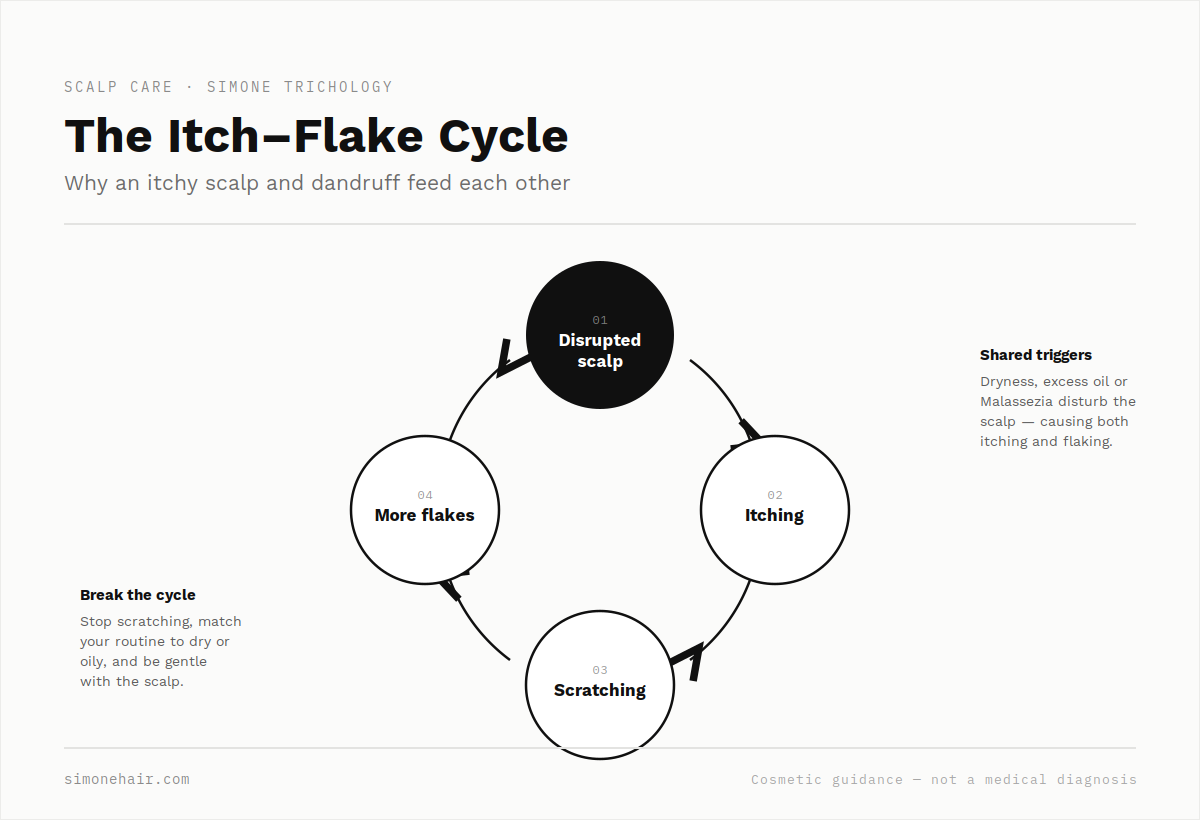
Dandruff and an itchy scalp share many of the same roots. Flaking is the scalp shedding skin cells faster than usual; itching is the scalp signalling that its balance is disturbed. The same triggers — a disrupted scalp environment, the natural yeast Malassezia, dryness or excess oil — tend to cause both at once. So it’s no coincidence they arrive together.
There’s also a self-reinforcing loop: an itchy scalp invites scratching, scratching irritates the skin and loosens more flakes, and the visible flaking and irritation make the scalp itch more. Breaking that itch–scratch–flake cycle is central to settling it.
It depends on whether your dandruff is dry or oily
Just as with dandruff on its own, the right approach depends on your type — and the itch behaves a little differently in each:
- Dry dandruff with itch: fine, greyish-white flakes on a tight, dry-feeling scalp. The itch tends to come from dryness and a compromised scalp barrier.
- Oily dandruff with itch: larger, yellowish flakes that cling, on a greasy scalp. Here excess sebum and Malassezia play a bigger role in the irritation.
If you’re not sure which you have, our guide on dry vs oily dandruff walks you through telling them apart — and it matters, because the two need almost opposite care.
How to calm an itchy, flaky scalp
Whichever type you have, a few principles help settle both the itch and the flaking:
- Stop scratching. It’s the hardest and most important step — scratching keeps the cycle going. Massage gently instead of scratching.
- Match the routine to your type. Dry, itchy, flaking scalps need gentle, moisturising care; oily, itchy, flaking scalps need balanced cleansing that manages sebum without stripping.
- Wash consistently with the right shampoo. A targeted, well-matched shampoo used regularly tends to settle an itchy, flaky scalp better than long gaps. See how often to wash your hair.
- Be kind to the scalp. Lukewarm water, thorough rinsing, no aggressive scrubbing.
- Support the scalp environment. Care designed for the scalp microbiome helps both the flaking and the itch settle over time.
SIMONE TRICHOLOGY’s Clinical Dandruff & Microbiome Care range is designed to care for the scalp environment behind both the flaking and the itch, matched to whether your scalp leans dry or oily. For the wider picture of what can make a scalp itch, see our guide to an itchy scalp and its causes.
When to see a professional
Most itchy, flaky scalps are a cosmetic concern that settles with the right care. But see a doctor or dermatologist if you have well-defined red or scaly patches, intense itching that disrupts sleep, sores or bleeding, or flaking and itching that don’t improve with appropriate scalp care. Conditions such as seborrhoeic dermatitis or scalp psoriasis can cause both itching and flaking and need medical assessment.
Not sure what's behind yours?
Because an itchy, flaky scalp can be dry, oily or something that needs a closer look, identifying yours is the fastest route to relief. Our online Hair Clinic offers a free, no-commitment pre-assessment: a few targeted questions about your hair and scalp, and personalised guidance on calming both the itch and the flaking.
SIMONE TRICHOLOGY products are cosmetic products and are not intended to diagnose, treat, cure or prevent any medical condition. If you have a persistent or severe scalp condition, please consult a healthcare professional.
