




Home › Trichology for beginners › Chapter 04
Dandruffand Desquamative Processes
Learn how SIMONE TRICHOLOGY explains dandruff and desquamative processes, their types, and effective treatments for a healthier scalp.
 Est. 1989 — Spain
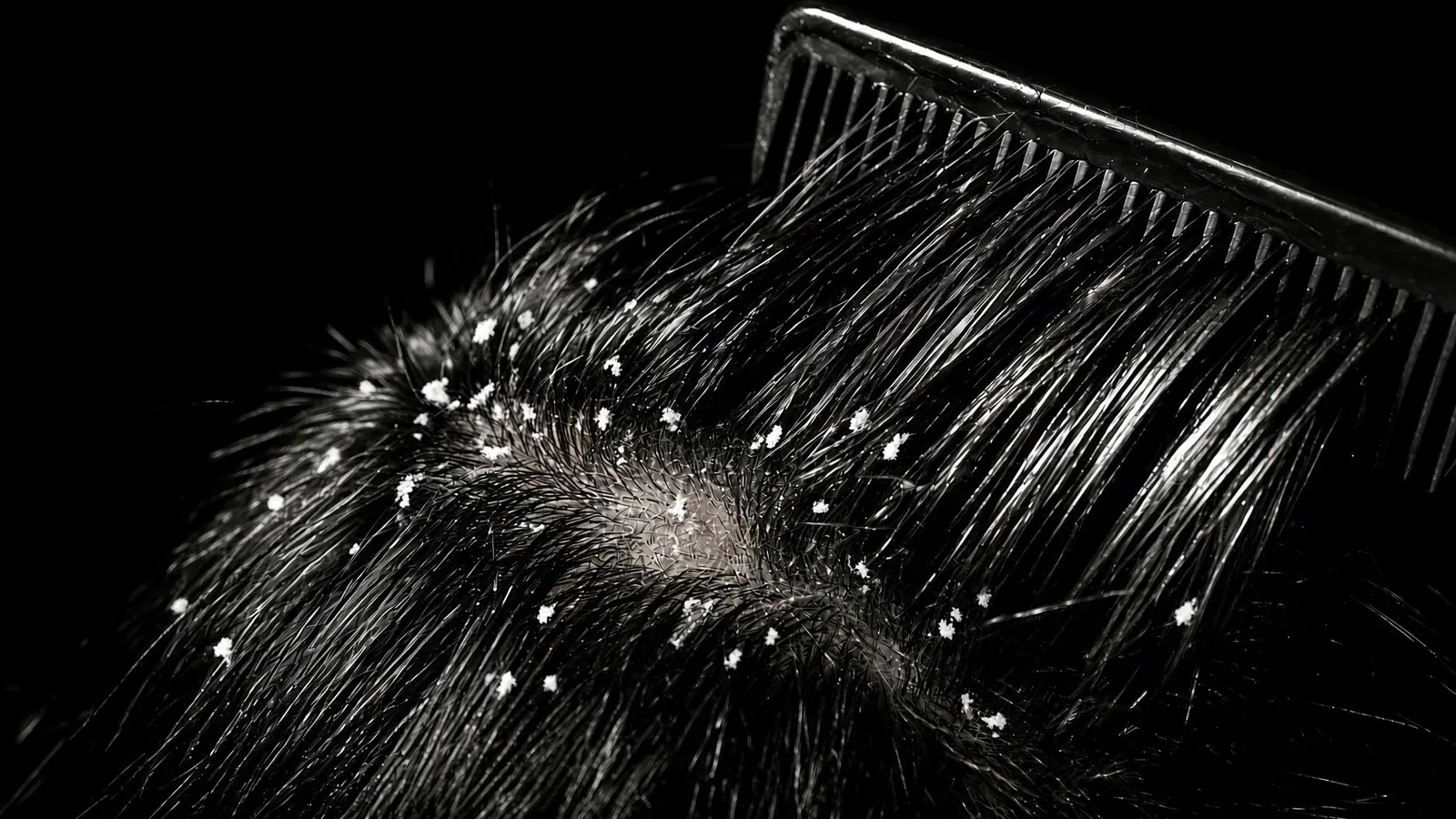
The skin renews itself continuously and imperceptibly. The moment we see an excess of shed cells, we are facing a desquamative process. In trichology, the term pityriasis describes an exfoliation of the epidermal cells of the stratum corneum — and is therefore a synonym of dandruff.
Understanding desquamation
Flaking is the visible sign that scalp cell turnover has sped up or become disordered. Not all flaking is the same: the fine, dry scales of common dandruff differ from the thick, greasy scales of more inflammatory conditions, and these in turn differ from the well-defined silvery plaques of psoriasis.
The yeast Malassezia (historically called Pityrosporum ovale) lives normally on every scalp, but it plays a central role in most flaking disorders: when it proliferates, it metabolises sebum and can trigger irritation and accelerated shedding. This is why correctly identifying the process is the first step before any routine.
Below are the four most common desquamative processes seen in trichology practice. For a practical, everyday comparison of the two most common forms, see our guide on dry vs oily dandruff and how to tell them apart.
Pityriasis simplex capitis
Pityriasis simplex capitis
Also: pityriasis sicca · common “dry” dandruff
The plaques are white-ash coloured, easily detached, and remain attached to the hair shaft; the scalp feels crisp and dry. It is regarded as the mildest, non-inflamed form of scalp flaking.
Common causes
- Nervous factors and stress
- Vitamin A deficiency
- Inappropriate or overly harsh shampoos
- Inadequate water intake
- Washing with water above 37°C
Suggested approach
Purify and prepare the scalp, cleanse regularly with an anti-dandruff shampoo alternated with a gentle moisturising shampoo, and apply a leave-in anti-dandruff treatment over a sustained period. Avoiding very hot water and harsh products helps prevent recurrence.
Explore Dandruff & Microbiome Care →Pityriasis steatoides
Pityriasis steatoides
Also: steatoid / oily pityriasis
Excess sebum together with the presence of the yeast Malassezia (Pityrosporum ovale) can produce a yellowish-gold plaque — stubborn, hard to remove, and accompanied by inflammation, redness and itching. A useful clue: the edges of the plaque are very well defined, which helps distinguish steatoid pityriasis from dermatitis.
Common causes
- Nervous system disorders and stress
- Abnormal proportion of Malassezia
- Immunological factors
- Inadequate diet
- Sebaceous hypersecretion
- Water too hot and inappropriate shampoos
When oily flaking comes with an itchy scalp, see our practical guide on itchy scalp and dandruff.
Suggested approach
Combine sebum control with anti-flake care: prepare the scalp, cleanse with a sebum-regulating shampoo alternated with an anti-dandruff shampoo, and apply leave-in sebum-control and anti-dandruff treatments over a sustained period.
Explore Dandruff & Microbiome Care →Seborrheic dermatitis
Seborrheic dermatitis
A relapsing inflammatory condition
The most important thing to understand is that seborrheic dermatitis is managed, not cured. It can be brought to a smooth, clean, calm state — but it is a chronic, relapsing condition. It belongs to a group of conditions whose exact origin is not fully established.
It is characterised by poorly demarcated red plaques with adherent greasy scales, often with irritation and aggravated by sweating. The typical zones are the hairline, eyebrows, sides of the nose, the area behind the ears, and — in more refractory cases — the moustache and chin. Recognised contributing factors include sebum breakdown by Malassezia, emotional/nervous factors, hormonal influences, diet and seasonal changes.
Suggested approach
The aim is to control flare-ups and keep the scalp calm: prepare the scalp, cleanse with a sebum-regulating shampoo alternated with an anti-dandruff shampoo, and use leave-in sebum-control and anti-dandruff treatments. Consistency matters more than intensity, since the condition recurs.
Because seborrheic dermatitis is a chronic medical condition, persistent or severe cases should also be reviewed by a dermatologist. A trichological routine supports comfort and control, not a cure.
Explore Dandruff & Microbiome Care →Psoriasis
Psoriasis (capitis)
A chronic, immune-mediated dermatosis
Like seborrheic dermatitis, psoriasis is a generally chronic dermatosis. It manifests as a thickening of the skin with well-demarcated, adherent, pearly-coloured scales; the nails may show pitting like a sewing thimble. It affects both men and women, runs in periods of improvement and exacerbation, and tends to worsen in dry seasons.
The most common zones are the elbows, knees, nails and head, though it can extend across the body. Although the causes are not fully known, it is associated with nervous disorders, infections, certain medications, and frequently has a genetic and family component. Modern dermatology classifies it as an immune-mediated (autoimmune) condition — which is what distinguishes it from common dandruff.
Suggested approach
Scalp psoriasis is a medical condition that should be diagnosed and managed by a dermatologist. A supportive scalp routine — gentle anti-flake cleansing and soothing leave-in care — can help comfort and appearance alongside medical treatment, but does not replace it.
If you see thick, silvery, well-defined plaques or nail pitting, seek a dermatological diagnosis. Our role here is supportive scalp care, not treatment of the underlying disease.
Book a free assessment →Clinical references
- Dandruff (pityriasis simplex capitis) as the mildest, non-inflammatory form of seborrheic dermatitis; role of Malassezia (StatPearls, NCBI; The Trichological Society).
- Fine scales = pityriasis sicca; thick seborrheic scales = steatoid pityriasis — terminology review (Cosmoderma; J Cosmet Dermatol).
- Scalp psoriasis as an immune-mediated condition distinct from dandruff; silvery plaques and nail pitting (dermatology references).
Start with a real assessment
Your scalp, read by a trichologist.
Three photographs, four minutes. Complimentary, reviewed personally within 24 hours.