






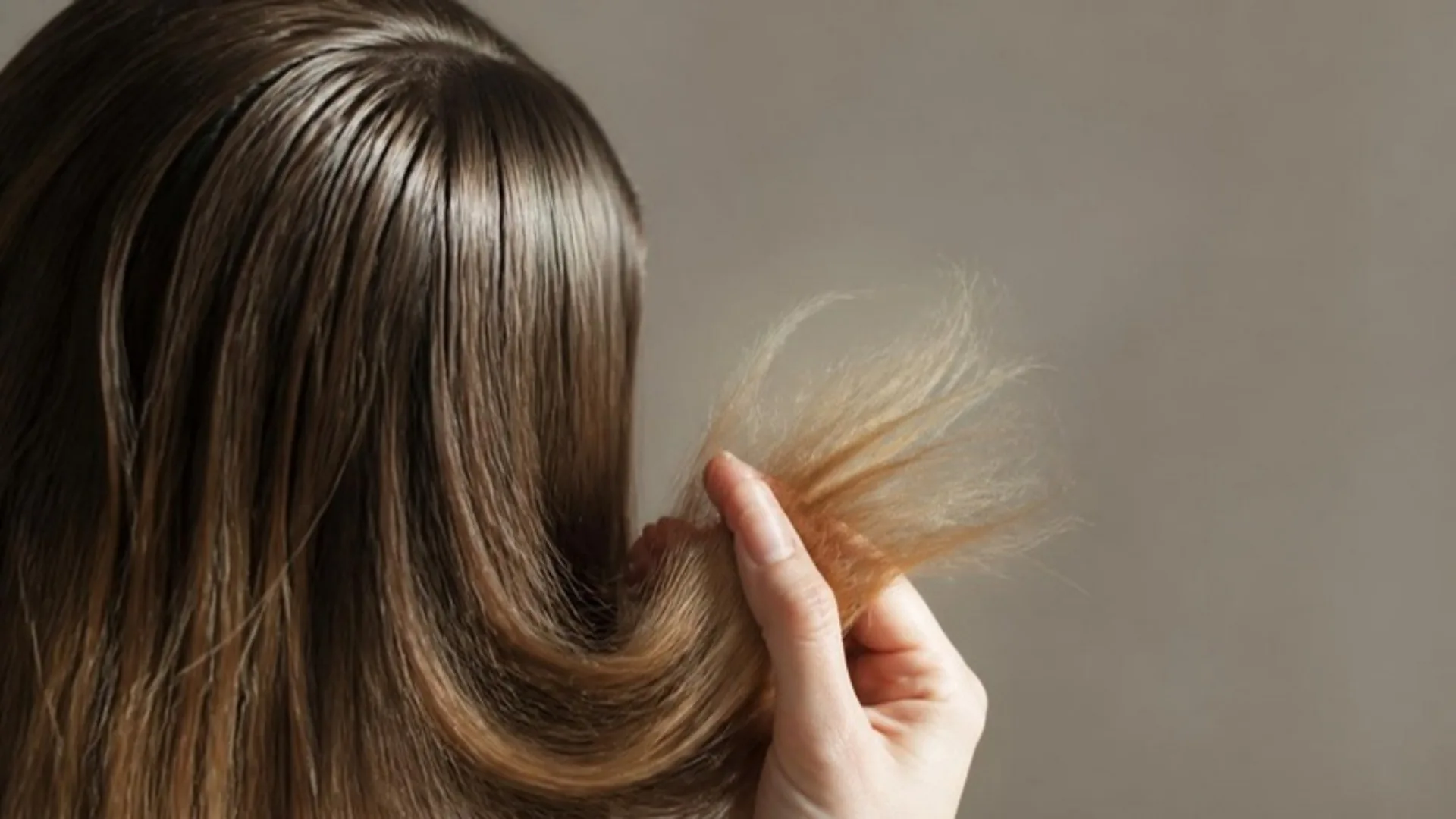
In short: greasy roots and dry ends are not a contradiction — they are two different problems happening on two different surfaces. The scalp produces sebum; the lengths do not. When the scalp over-produces oil and the lengths are porous or damaged, you get an oily root and a dry, frizzy end on the same strand. The routine that helps treats the scalp and the lengths separately: a sebum-balancing cleanse and leave-in at the root, moisture and repair only from mid-length down.
If your hair looks flat and shiny at the parting the morning after washing, yet the ends feel like straw, this guide explains why it happens, what quietly makes it worse, and how a trichology-led routine approaches it.
Why roots get greasy while ends stay dry
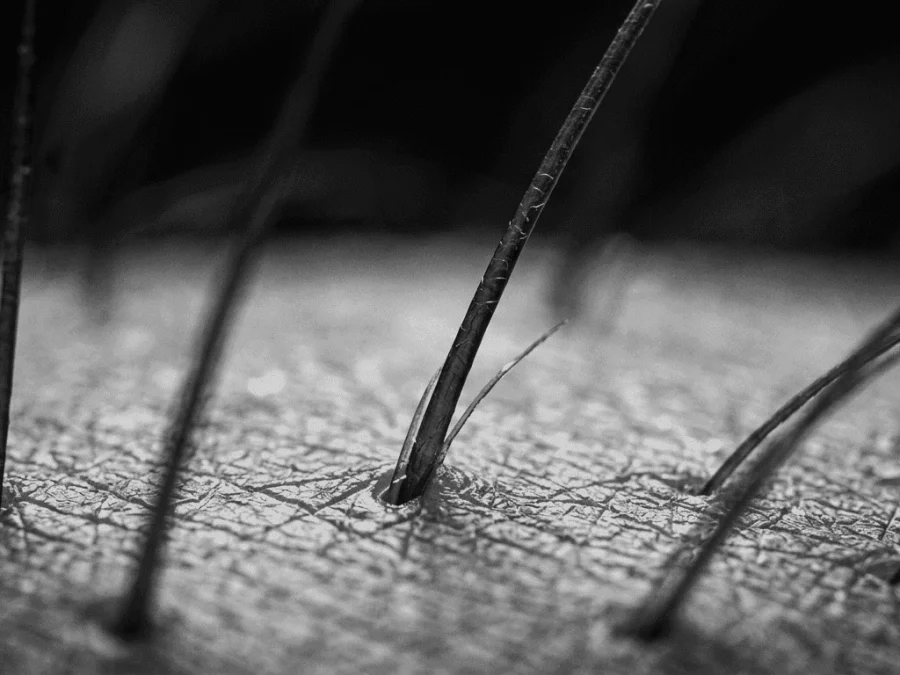
Every hair follicle has a sebaceous gland attached to it. The sebum it produces coats the scalp and the first centimetres of hair, protecting the skin and giving the root its natural suppleness. On a scalp that produces more sebum than it needs — because of hormones, stress, heat, humidity or simply genetics — that film builds up quickly. Within a day of washing, the roots look oily again.
The lengths are a different story. Hair that is long, coloured, bleached, heat-styled or exposed to sun and sea has an open, porous cuticle that loses water fast. Sebum from the scalp rarely travels further than a few centimetres down the fibre, so the ends never receive it. The result is one strand with two climates: a humid root and a dehydrated end.
In trichology this is a textbook case of a scalp concern and a fibre concern coexisting. Treating the whole head as “oily” dries the ends further; treating it as “dry” weighs the roots down. For the biology behind sebum production, see our guide to seborrhoea and the sebaceous processes.
What quietly makes the combination worse
- Washing too aggressively. Harsh, very foaming shampoos strip the scalp, which responds by producing more sebum, while the same wash dries the lengths a little more each time.
- Very hot water. Heat stimulates the sebaceous glands and opens the cuticle of the lengths.
- Conditioner on the roots. Conditioners and masks are made for the fibre. Applied at the scalp they coat the root, flatten it and make it look oily within hours.
- Dry shampoo every day. Useful occasionally, but the powder builds up on the scalp and mixes with sebum into a residue that itches and dulls the root.
- Heat tools on the ends. Straighteners and dryers on already porous lengths widen the gap between a greasy root and a brittle end.
- Touching and brushing from the root. Hands and brushes drag sebum down the first centimetres and spread it where it shows most.
The trichology approach: two surfaces, two routines
A trichologist does not look for one product for your “hair type”. The question is what each surface needs. The scalp needs its sebum rebalanced without being stripped; the lengths need moisture and fibre repair without anything heavy touching the root. In practice that means three things done in the right place:
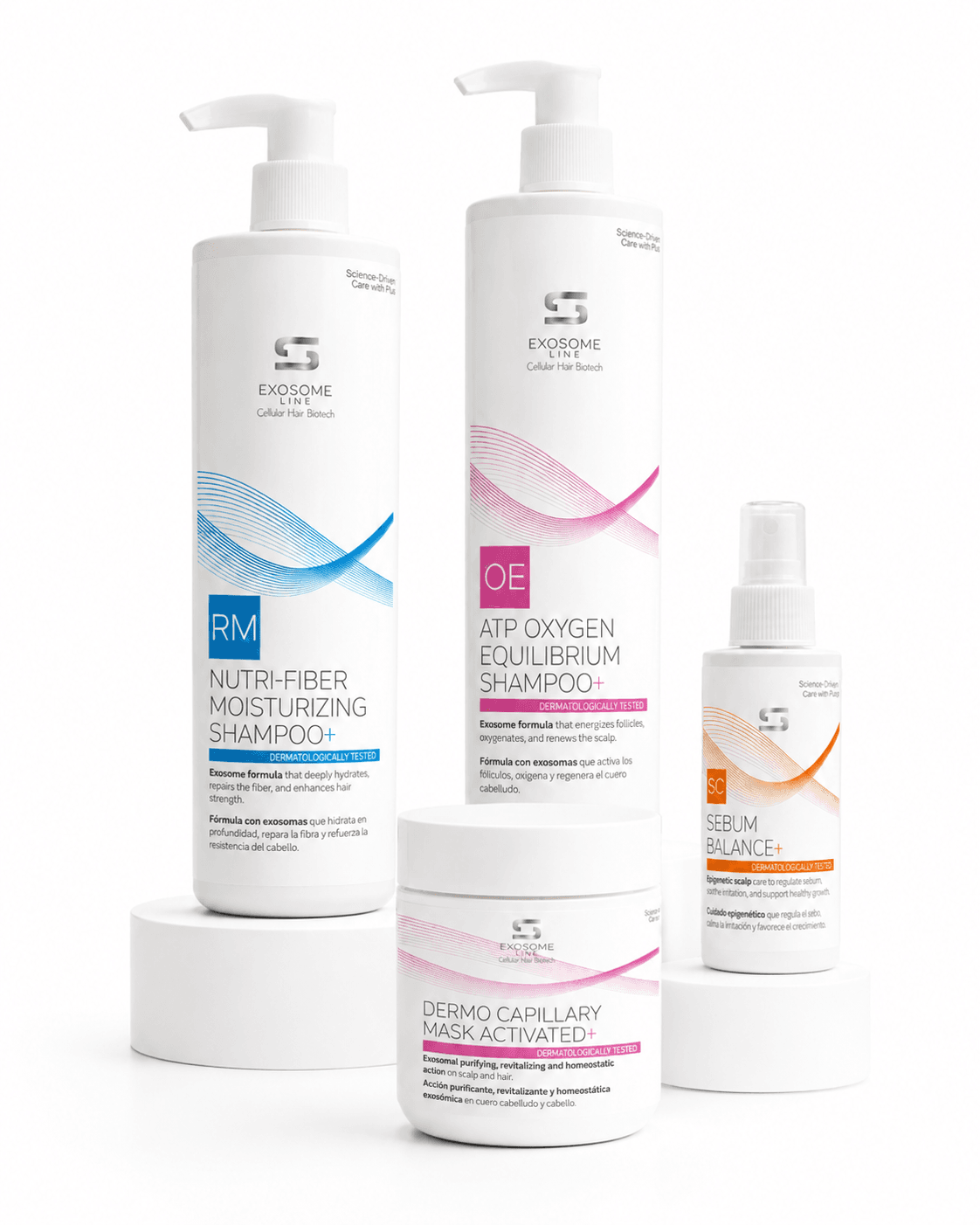
- Prepare the scalp. Once or twice a week, before washing, a gentle exfoliating scalp mask lifts sebum residue, dry-shampoo build-up and dead cells, so the follicle opening is clear and the shampoo can work. The Dermo Capillary Mask Activated Plus, with azelaic acid and TFD™ biomimetic exosomes, is designed for this step.
- Cleanse the root, not the ends. Apply a sebum-balancing shampoo to the scalp only and massage with the fingertips; let the foam run through the lengths when you rinse, which is enough to clean them. Alternating a sebum-control shampoo with a moisturising one — for instance Sebum Control Shampoo Plus one wash and Nutri Fiber Moisturizing Shampoo Plus the next — rebalances the scalp without drying the fibre.
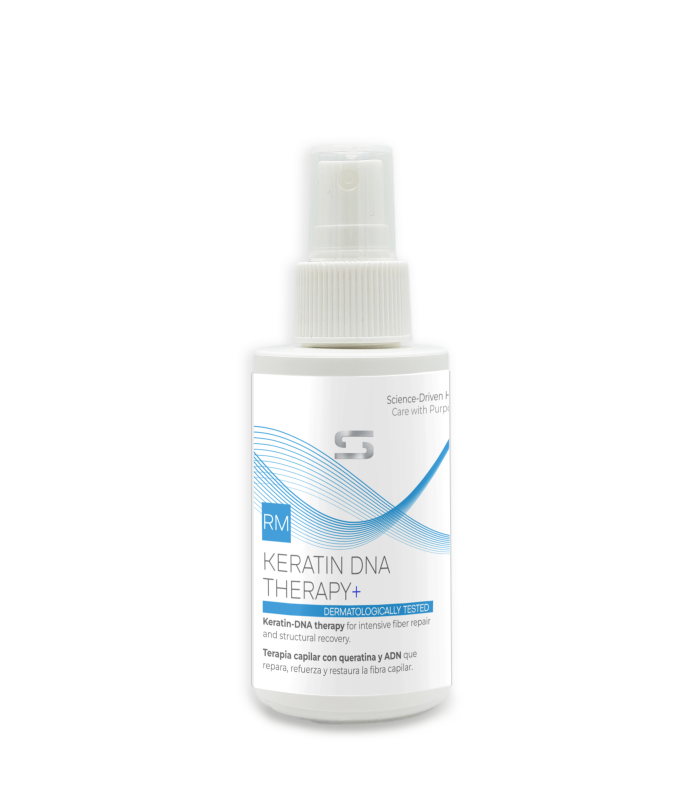
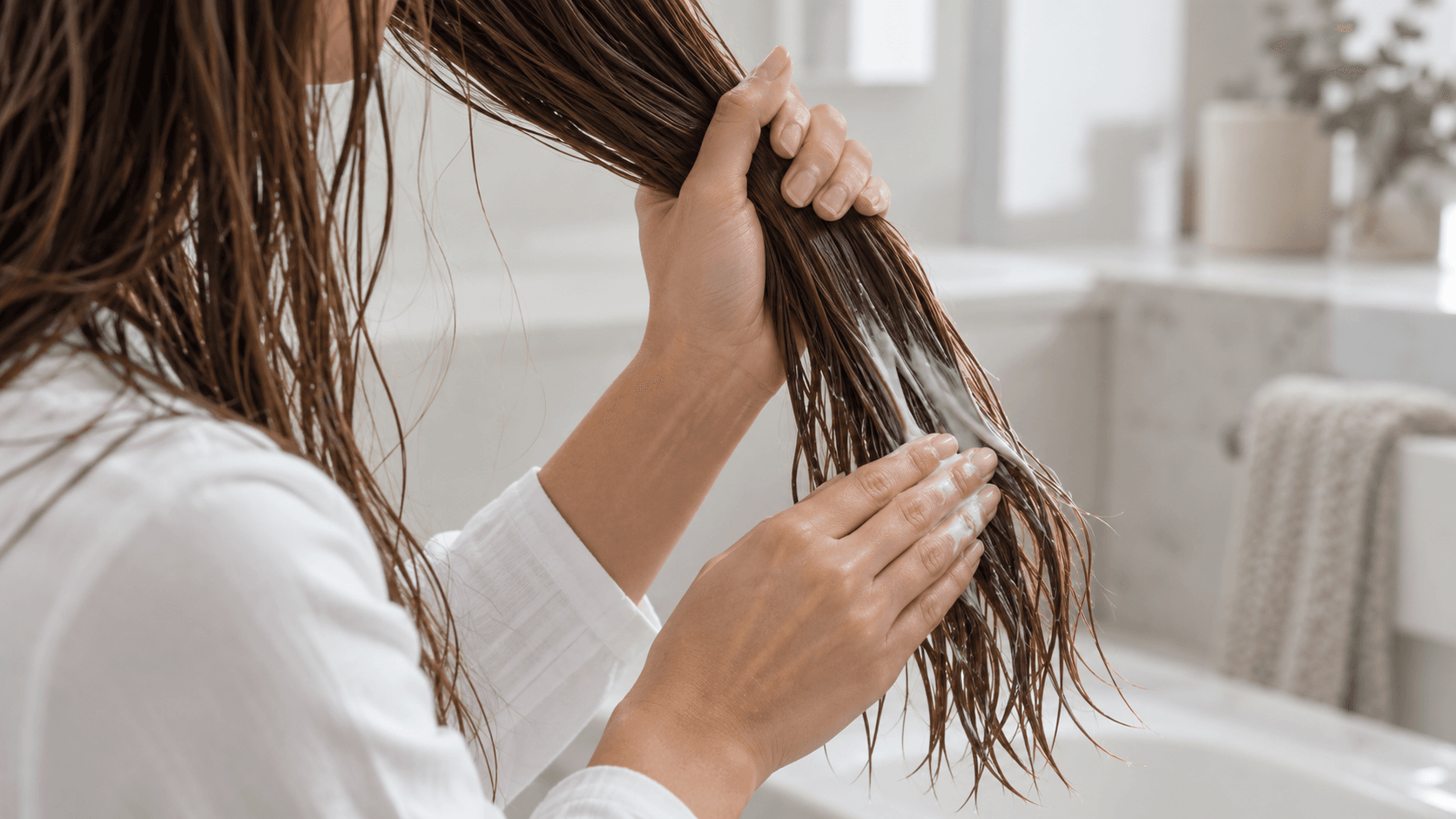
- Treat each surface after washing. A light leave-in such as Sebum Balance Plus on the scalp helps reduce the look of shine and extend the time between washes; a conditioner or mask on the lengths only, from the ears down, restores moisture and smoothness without weighing the root.
These three steps are exactly what the Seborrhea Control Routine brings together: pre-wash scalp mask, two shampoos to alternate and the Sebum Balance leave-in, 15 % cheaper than the products bought separately. If your scalp is very oily, itchy or has an odour by the evening, the Intensive Oil-Control Routine is the stronger version.
How often should you wash greasy roots?
As often as the scalp needs — which for most people with oily roots is every day or every other day. Washing daily is not harmful when the shampoo is gentle and applied to the scalp only; what damages the lengths is scrubbing them, hot water and heat afterwards. Spacing washes out by force usually backfires, because sebum sits on the scalp longer. See our guide on whether it is bad to wash your hair every day.
When greasy roots are not just greasy roots
An oily scalp is a cosmetic concern in the great majority of cases. Some signs, however, deserve a dermatologist rather than a new shampoo: yellowish, greasy flakes stuck to the scalp, red or inflamed patches, persistent itching that disturbs sleep, or an oily scalp that appears together with noticeable shedding. These can point to seborrhoeic dermatitis or another scalp condition that needs medical assessment. Our article on why the scalp produces excess sebum explains the difference.
If you are not sure which routine fits your case, our free online Hair Clinic lets a trichology specialist review three photographs and a short questionnaire and send you a personalised assessment, with no cost and no obligation.
Frequently asked questions
Because the scalp produces sebum continuously, and a scalp that over-produces it refills the first centimetres of hair within 24 hours. Washing the scalp — not the lengths — with a sebum-balancing shampoo, and keeping conditioner away from the root, usually extends the time before the roots look oily again. Yes, on the lengths and ends only. Conditioner applied from the ears down restores moisture to the dry part of the hair without touching the scalp. Rinse with cool or lukewarm water. If the scalp needs it, yes. A gentle sebum-balancing shampoo applied to the scalp only can be used daily. What dries the ends is scrubbing, very hot water and heat styling, not the frequency of washing itself. Used every day, it can. The powder mixes with sebum and builds up on the scalp, which then looks dull and can itch. Keep it for occasional use and remove the residue with a pre-wash scalp mask. No. All SIMONE TRICHOLOGY products are cosmetics. They help rebalance excess sebum and keep the scalp comfortable; they do not treat seborrhoeic dermatitis or any other medical condition. Red, inflamed or persistently itchy areas should be seen by a dermatologist.Why are my roots greasy the day after washing?
Can I use a conditioner if my roots are oily?
Should I wash greasy roots every day?
Does dry shampoo make greasy roots worse?
Do SIMONE products contain any medicines?
SIMONE TRICHOLOGY products are cosmetic products and are not intended to diagnose, treat, cure or prevent any medical condition. If you have a persistent or severe scalp condition, please consult a healthcare professional.