





For years, hair care focused almost entirely on the hair you can see — length, shine, repair. But healthy hair begins somewhere less visible: the scalp. The scalp is living skin, and the environment it provides is the foundation for stronger, fuller-looking hair. This is the principle at the heart of trichology, and it has a name: the scalp–hair axis. This guide explains what scalp health really means, why the scalp microbiome matters, and how to care for your scalp according to your concern.
The scalp–hair axis: why the scalp comes first
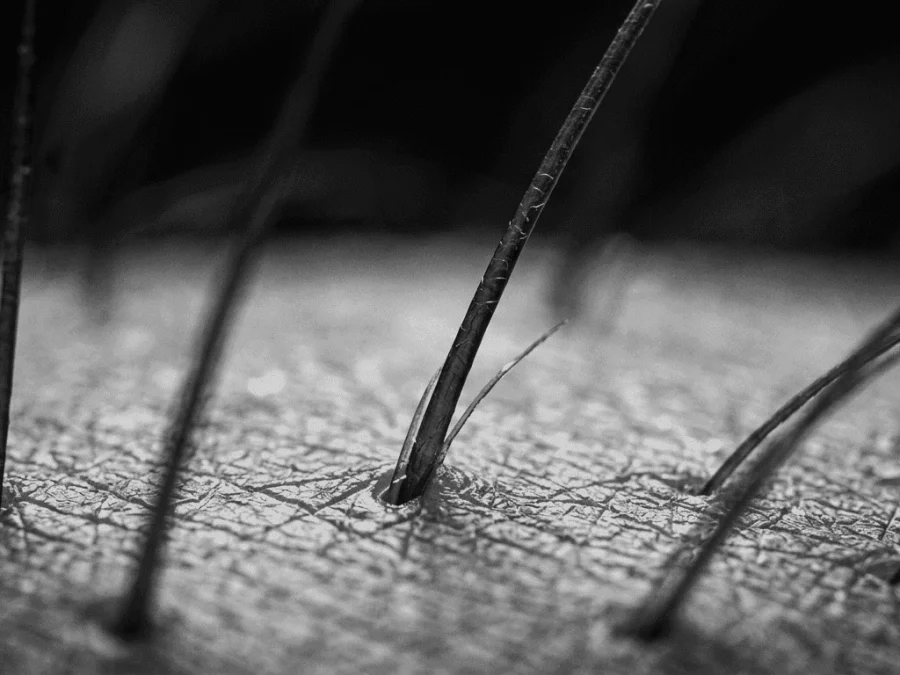
Every hair grows from a follicle, and every follicle sits in a living environment of skin, sebum, microorganisms and blood supply. When that environment is calm, clean and balanced, hair has the best possible foundation to grow and look its best. When it is irritated, congested or out of balance, it often shows in the hair — dullness, weakness, more shedding or simply hair that never quite looks its best.
This is why a trichology-led approach always starts at the scalp rather than at the ends. Looking after the scalp is not a separate step from hair care — it is hair care, at its source.
Your scalp is skin — so treat it like skin
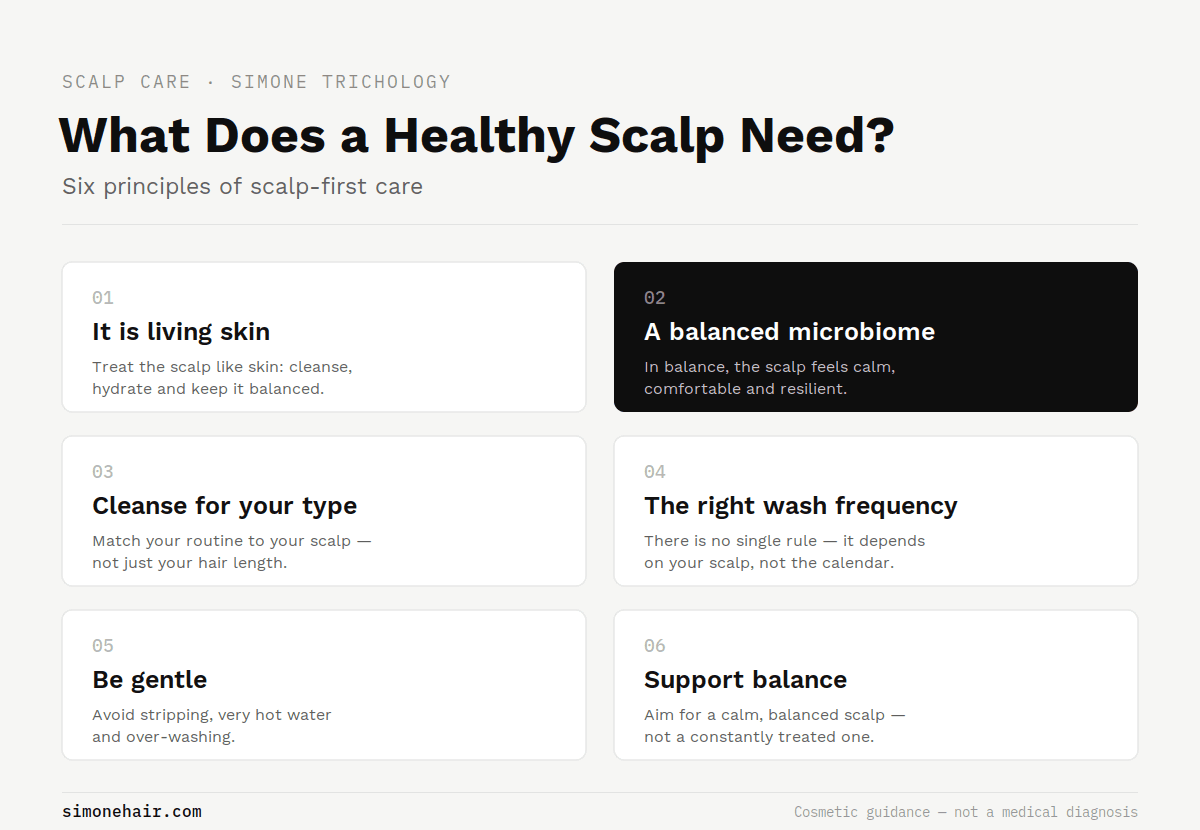
The scalp is, quite simply, an extension of the skin, but with some particular features: many more sebaceous (oil) glands and far more hair follicles than facial skin, and a slightly thicker structure. Like the skin on your face, it benefits from appropriate cleansing, hydration and balance — and it can suffer from dryness, oiliness, sensitivity and build-up.
Thinking of scalp care as “skin care for the scalp” is a useful shift. It moves the focus from masking problems to supporting a healthy environment: clean without stripping, balanced rather than over-treated, and matched to what your scalp actually needs.
The scalp microbiome
Your scalp is home to a community of microorganisms — its microbiome. When this ecosystem is in balance, the scalp tends to feel calm, comfortable and resilient. When it is disrupted, that balance can tip towards common concerns such as itching, flaking or excess oil. Supporting the scalp’s natural balance, rather than aggressively scrubbing it away, is increasingly understood as central to a comfortable, healthy scalp.
This is exactly the thinking behind our Clinical Dandruff & Microbiome Care approach: trichological dermocosmetic care designed to respect and support the scalp’s own ecosystem rather than disrupt it.
Want to go deeper? See our full guide to the scalp microbiome.
Common scalp concerns
Most scalp issues fall into a handful of familiar patterns. Each has its own causes and its own routine:
- Oily scalp and excess sebum. When the scalp produces more oil than usual, hair can look flat and feel greasy quickly. Read more about a greasy scalp.
- Dandruff and flaking. Visible flakes, often alongside itching, with different causes for a dry versus an oily scalp. Read more about dry vs oily dandruff.
- Itchy scalp. Itching can come from dryness, product build-up, sensitivity or stress, and the right response depends on the cause. Read more about an itchy scalp.
- Sensitive scalp. A reactive scalp that tingles, tightens or feels uncomfortable needs gentle, soothing care. Read more about a sensitive scalp.
You can also explore the fundamentals in our educational hub: Seborrhoea & sebaceous processes and Dandruff & desquamative processes.
How to care for your scalp
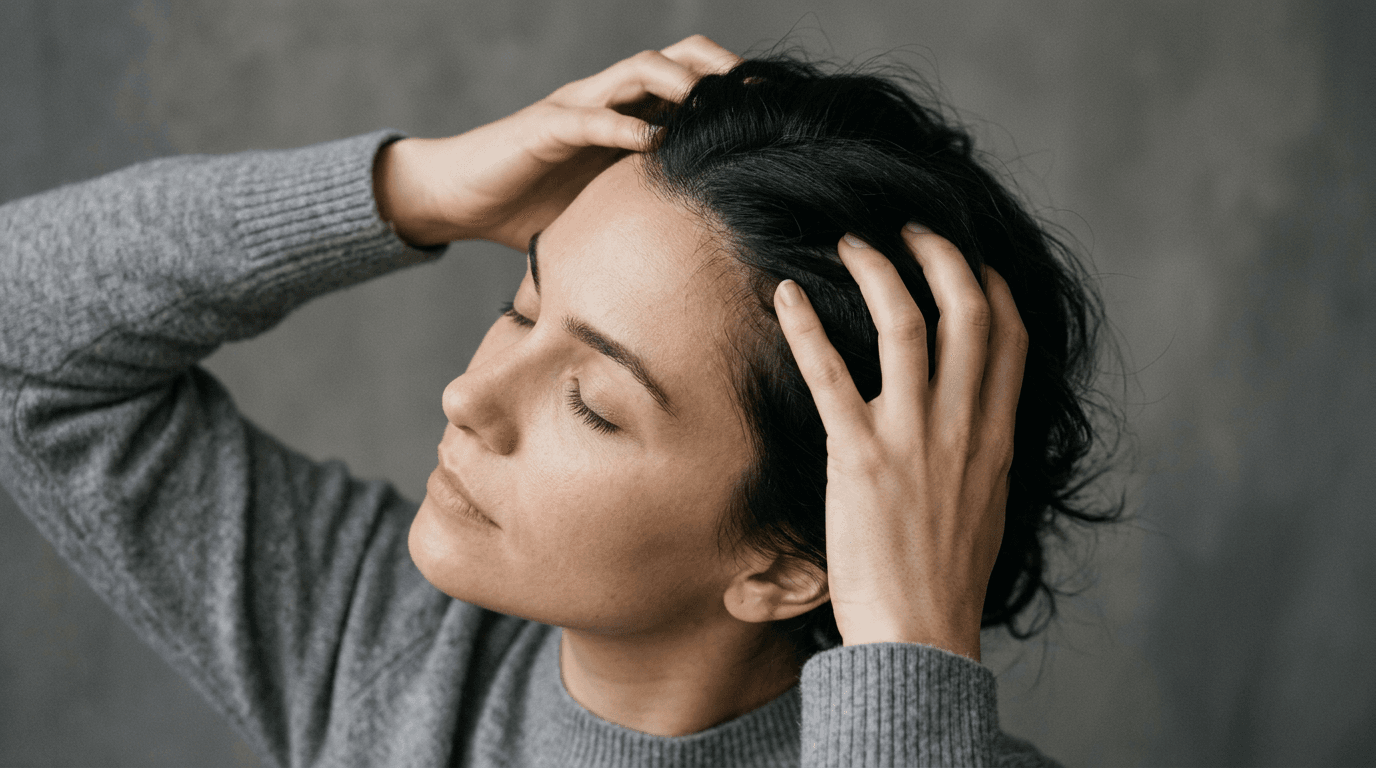
A healthy scalp routine is less about doing more and more about doing the right things consistently:
- Cleanse for your scalp type. Match your shampoo to your scalp — oily, dry, sensitive or flaky — rather than to your hair length alone.
- Wash at the right frequency. There is no single rule; it depends on your scalp. Read more about how often to wash your hair.
- Be gentle. Avoid aggressive scrubbing, very hot water and harsh products that strip the scalp and disturb its balance.
- Support balance, don’t fight it. The aim is a calm, comfortable, balanced scalp — not a constantly “treated” one.
- Make scalp care a habit. Small, regular gestures keep the scalp comfortable — even a gentle scalp massage as part of your routine.
When to see a professional
Good cosmetic care keeps the scalp in the best possible condition, but some situations need a professional eye. It is worth seeking advice when itching, flaking or redness is persistent or severe, when there are sore or weeping areas, or when a scalp concern comes alongside noticeable hair loss — these can point to a condition that a doctor or dermatologist should assess, rather than something cosmetic care alone can address.
If you would like a starting point, SIMONE TRICHOLOGY offers a free online Hair Clinic: answer a few guided questions and a trichology specialist will review your case personally and send a tailored assessment by email, at no cost and with no obligation.
The SIMONE TRICHOLOGY approach
Our entire range is built around the scalp–hair axis and organised by concern rather than by hair type, so each routine matches a real situation — oily scalp, dandruff, sensitivity, comfort. Supported by proprietary technology and decades of trichology research, the aim is always the same: a healthy, balanced scalp environment as the foundation for stronger, fuller-looking hair.
This article is for general information and is not a substitute for personalised medical advice. SIMONE TRICHOLOGY products are cosmetic and are not intended to diagnose, treat, cure or prevent any medical condition.