






Hair care marketing has discovered the suffix “-ceutical”. First came cosmeceuticals, then nutraceuticals, and now a newer arrival: trichoceuticals. The words sound scientific, even clinical — and that is precisely the point. But what do they actually mean, who regulates them, and should the label on a bottle change what you expect from it? A trichologist explains.
What are cosmeceuticals?
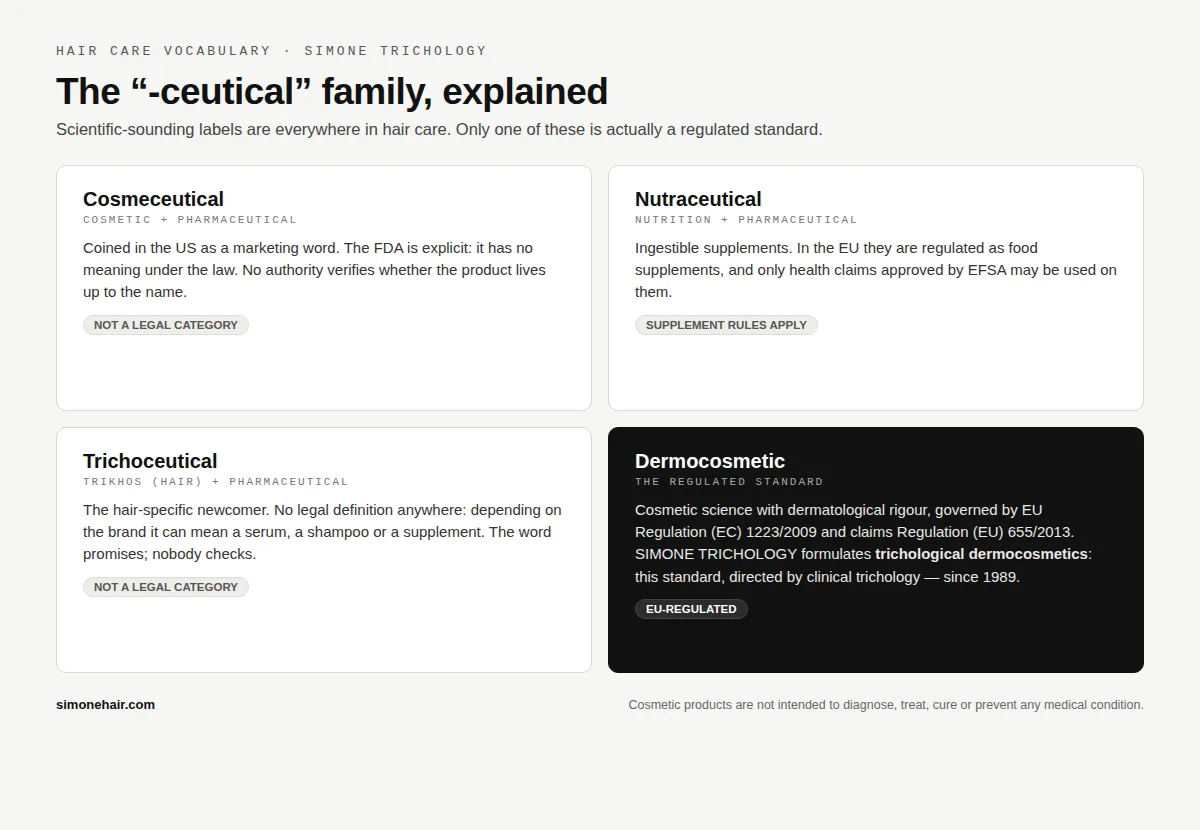
The oldest of the family, cosmeceutical, was coined in the United States as a fusion of the words for skin-care products and pharmaceuticals: a personal-care product presented as containing bioactive ingredients with drug-like benefits. The US Food and Drug Administration is unambiguous about it: under US law, a product can be a drug, a personal-care product, or both — but “cosmeceutical” has no meaning under the law. It is a marketing word, not a product category, and no authority checks whether a product wearing it lives up to the promise.
In hair care, “cosmeceutical” is typically attached to shampoos, serums and scalp treatments built around concentrated actives — products that want to signal they are more serious than conventional hair care. Sometimes they are. The label itself, however, guarantees nothing.
What are trichoceuticals?
The newer arrival blends tricho- (from the Greek trikhos, “hair”) with the same pharmaceutical ending. It is used for hair and scalp products that present themselves as sitting between conventional care and medicine — focused on the follicle and the scalp rather than only the hair shaft, built around concentrated botanical and biotech actives, and often using encapsulation technologies to carry ingredients towards the base of the follicle.
Here is the important part: like “cosmeceutical”, the term has no legal definition anywhere. Depending on who is using it, a “trichoceutical” can be a topical serum, a shampoo or an ingestible supplement (some definitions borrow from nutraceuticals, the supplement branch of the family). Two brands can put the same word on completely different products, and no regulator will object to the inconsistency — because no regulator recognises the category in the first place.
In Europe, the rules are different — and stricter
The European Union does not leave this space undefined. Every hair and scalp product sold as a care product rather than a medicine falls under Regulation (EC) 1223/2009, and every claim it makes must comply with Regulation (EU) 655/2013: claims must be truthful, supported by evidence, and must not attribute medical properties to the product. A hair-care product that presents itself as having therapeutic action does not become more credible in the eyes of European authorities — it becomes a problem.
This is why serious European laboratories describe their work as dermocosmetic: the science of skin and hair care developed with dermatological rigour, formulated and tested to the standards of the EU regulatory framework (Regulation (EC) 1223/2009), the most demanding in the world — and honest about where care ends and medicine begins.
What the buzzwords promise — and how it is actually done
Strip away the suffix, and what “cosmeceutical” and “trichoceutical” marketing describes is real and worth wanting: care that starts at the scalp and the follicular environment rather than the shaft; concentrated botanical and biotech actives chosen for their evidence base; delivery systems that carry those actives where they are useful. None of that requires an unregulated label. It requires trichology.
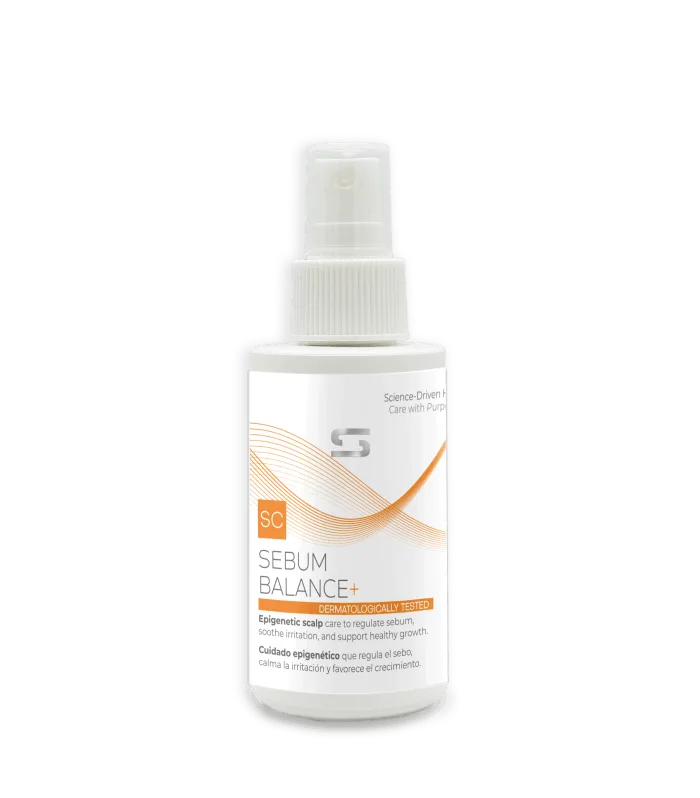
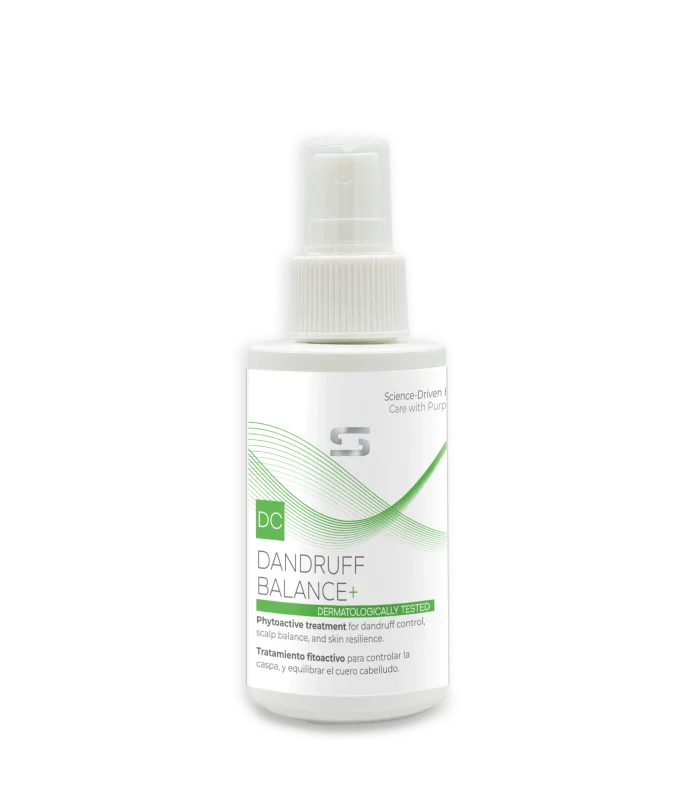
At SIMONE TRICHOLOGY this has been the working method since 1989: trichology as the clinical discipline guiding what a formula should do, dermocosmetic regulation as the framework it must respect, and technology to close the distance between the two. It is why we describe our work as trichological dermocosmetics: dermocosmetic science, directed by clinical trichology. The TFD System with biomimetic follicular-release exosomes — biomimetic vegan exosomes that transport actives to the follicular environment and release them gradually — was chosen precisely to deliver advanced performance while remaining fully within the EU regulatory framework (Regulation (EC) 1223/2009).
How to read a label like a trichologist
When you evaluate a hair or scalp product, the suffix on the category name tells you very little. What matters is whether the brand is transparent about its ingredients and what they are there to do; whether its claims are realistic, or promise things no hair-care product can legally deliver; whether there is genuine expertise behind the formulations; and whether the product is honest about when a scalp concern needs a doctor rather than a bottle. A label that leans on impressive-sounding words to imply medical action is not a sign of a stronger product — it is usually a sign of weaker discipline.
The bottom line
“Cosmeceutical” and “trichoceutical” are marketing vocabulary: sometimes attached to good products, sometimes not, and verified by no one. “Dermocosmetic” describes something concrete — skin and hair care developed with dermatological rigour under the strictest regulation of its kind in the world (Regulation (EC) 1223/2009). And trichological dermocosmetics — the standard we work to — adds the missing piece the buzzwords gesture at: clinical trichology directing the science. If you take one thing from this article, let it be this: judge the science and the honesty, not the suffix.
Not sure what your hair and scalp actually need?
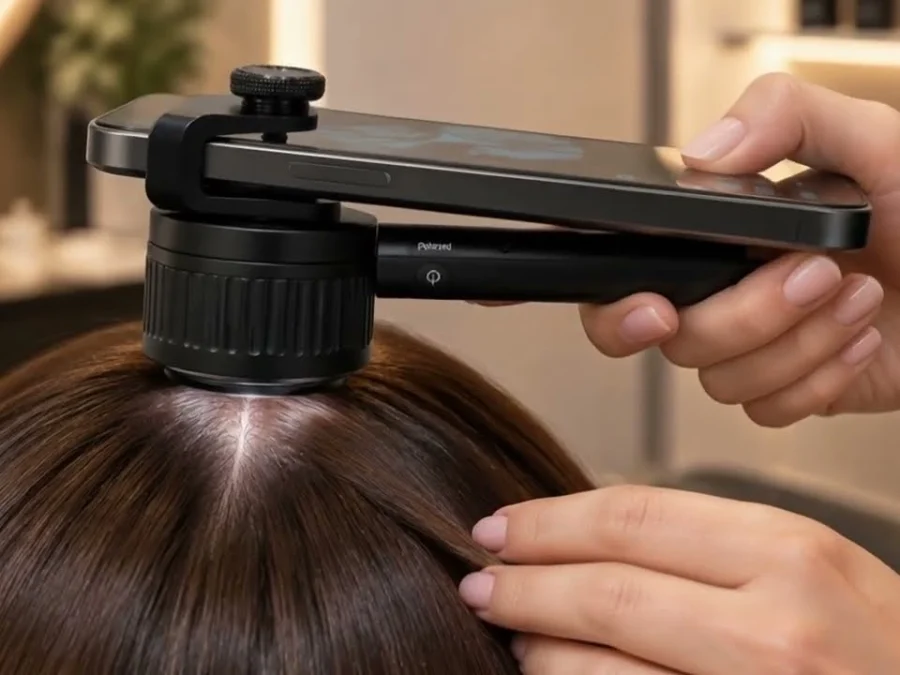
The most scientific first step is not a category of product — it is understanding your own case. Our free online Hair Clinic offers a personalised hair and scalp pre-assessment, reviewed by our trichology team, so any routine you build starts from evidence rather than labels.
This article is part of our guide to hair loss treatment options. You may also find this useful: Dixidox Forte Advance+ serum for thinning hair.
SIMONE TRICHOLOGY products are trichological dermocosmetic products and are not intended to diagnose, treat, cure or prevent any medical condition.