







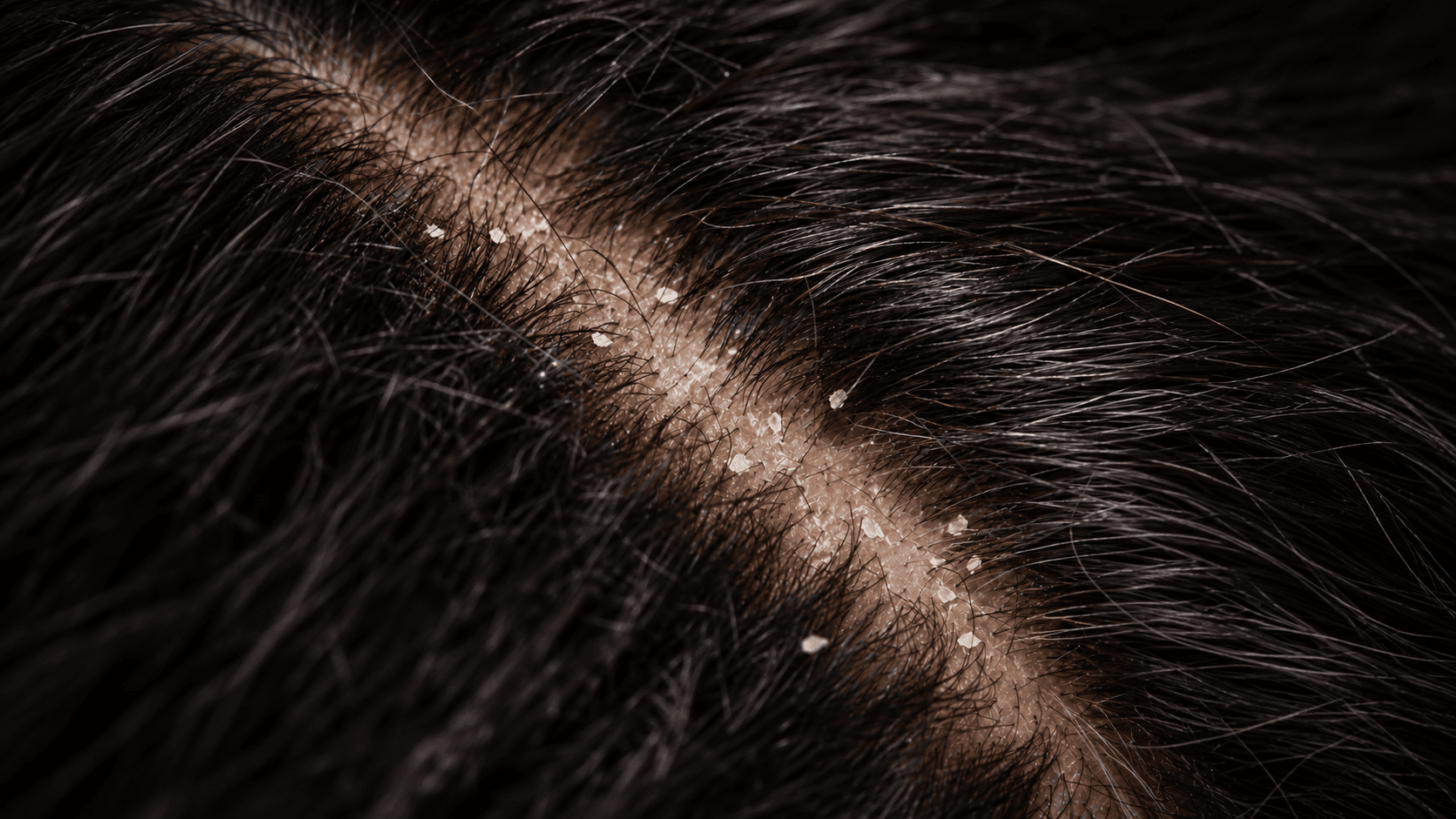
In short: dry dandruff is the fine, white, powdery flaking of a scalp that is shedding dead cells faster than normal while producing little sebum. The flakes are small and loose, fall easily onto the shoulders and come with a tight, sometimes itchy scalp — not with greasy hair. It is a cosmetic scalp concern in most cases, and the routine that helps is the opposite of “washing harder”: prepare the scalp, cleanse gently, and leave a balancing treatment on between washes.
If you see white dust on a dark jumper, your scalp feels tight after washing and your hair is rather dry than oily, this guide explains what is happening, how to tell dry dandruff from the oily kind, and how a trichology-led routine approaches it.
What dry dandruff is
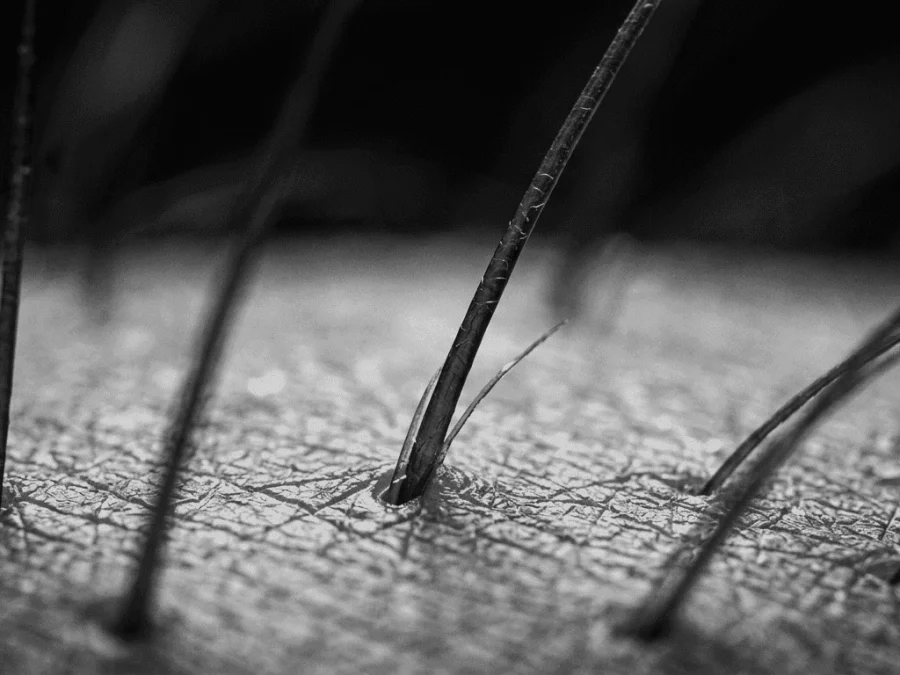
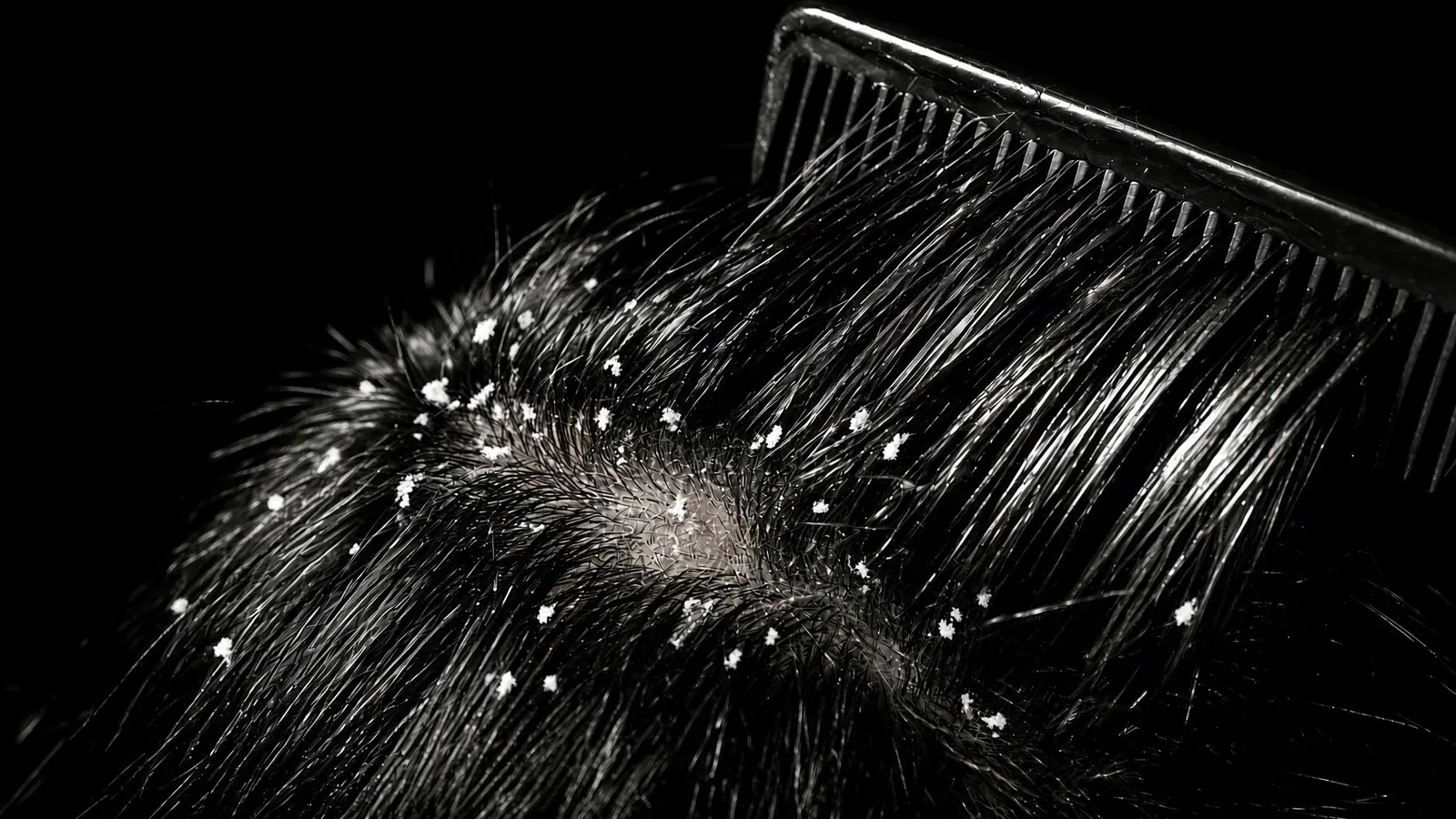
The scalp renews itself constantly: new cells form in the deeper layers, travel to the surface and are shed invisibly. Dandruff appears when that renewal accelerates and cells are shed in clumps large enough to see. When the scalp is also short of sebum — because of cold, dry air, hot water, harsh shampoos or simply skin that tends to be dry — the clumps are small, white and powdery and they do not stick to the scalp. That is dry dandruff: fine flakes, a dry or tight feel, and often a light itch that gets worse in winter or after a heated room.
It is important to say what it is not. Dry dandruff is not a sign of poor hygiene, it is not contagious and it is not caused by washing too little. In many people it is simply a dry, sensitive scalp that over-reacts to its environment. For the biology of flaking, see our pillar chapter on dandruff and the desquamative processes and our article on what dandruff is and why it occurs.
Dry dandruff or oily dandruff? How to tell
The two patterns look different and call for different care, so it is worth a minute in front of the mirror:
- Dry dandruff: small, white, loose flakes; they fall onto the shoulders when you brush or scratch; the scalp feels tight and the hair is dry, dull or static; worse in cold months.
- Oily dandruff: larger, yellowish flakes that stick to the scalp and the roots; greasy hair within a day of washing; a scalp that itches and may smell by the evening; worse with stress, heat and humidity.
Many people have a mixed picture — dry lengths and a slightly oily root — which is why the routine below cleans the scalp without stripping it rather than “drying out” dandruff. Our comparison of dry vs oily dandruff goes through the differences in detail.
What quietly makes dry dandruff worse
- Anti-dandruff shampoos made for oily scalps. Strong purifying formulas remove the little sebum a dry scalp has, so the tight feel and the flaking come back faster.
- Very hot water and a hot hairdryer close to the scalp. Both dehydrate the skin and loosen flakes.
- Central heating and cold, dry air. The classic reason dry dandruff peaks between November and March.
- Scratching. Nails lift more flakes, irritate the skin and keep the itch cycle going.
- Styling products left on the scalp. Hairspray, dry shampoo and gels dry on the skin and come off as flakes that are not dandruff at all but look exactly like it.
- Washing less to “protect” the scalp. Dead cells and product residue stay on the skin longer; gentle, regular washing is better than spacing washes out.
The trichology approach: three steps, none of them aggressive
A trichologist does not try to scrub dandruff away. The aim is a scalp that renews itself at a normal pace, keeps its barrier and its microbiome in balance and is comfortable between washes. In practice that is three steps in the right order:
- Prepare. Once or twice a week, before washing, apply a gentle scalp mask to lift loose flakes and residue so the shampoo reaches clean skin. The Dermo Capillary Mask Activated Plus, with azelaic acid and TFD™ biomimetic exosomes, is designed for this step and conditions the scalp rather than drying it.
- Cleanse gently. Use a flake-control shampoo formulated for both dry and oily patterns, applied to the scalp with the fingertips and rinsed with lukewarm water. Dandruff & Scalp Care Shampoo Plus helps visibly reduce flaking and soothe discomfort; alternating it with Nutri Fiber Moisturizing Shampoo Plus keeps a dry scalp and dry lengths soft and hydrated.
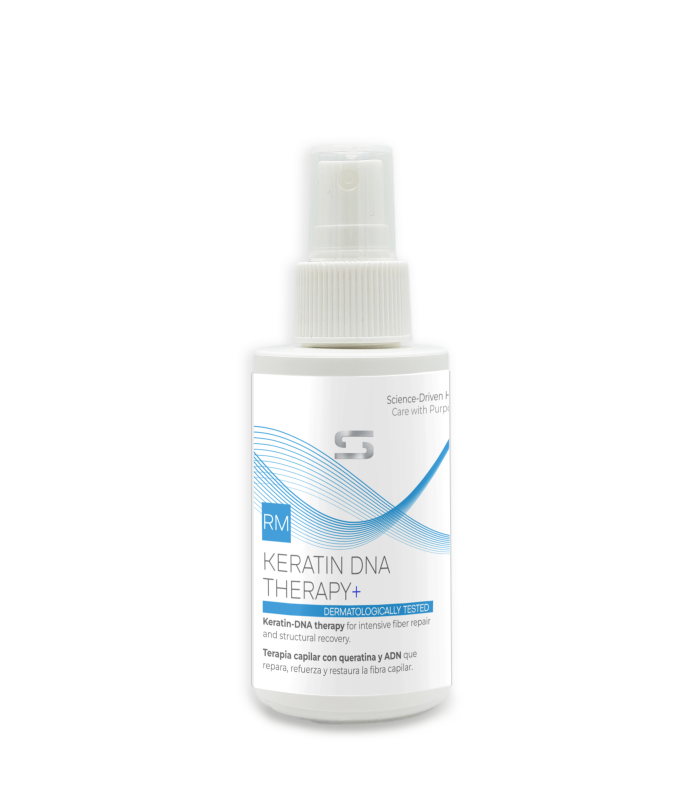
- Treat between washes. A leave-in scalp concentrate such as Dandruff Balance Plus, applied to the scalp after washing, supports a comfortable, balanced scalp, helps reduce visible flakes and calms the itch without rebound dryness.
These three steps are exactly what the Dry Dandruff Routine brings together: pre-wash scalp mask, two shampoos to alternate and the Dandruff Balance leave-in, 15 % cheaper than the products bought separately. First visible changes usually come in the first weeks; the full routine is designed for 60–90 days.

How often should you wash a scalp with dry dandruff?
Every two to three days for most people — often enough to remove dead cells and residue, with a shampoo gentle enough not to strip the scalp. Daily washing is fine when the formula is mild and the water is lukewarm; what makes dry dandruff worse is heat, harsh surfactants and scratching, not the frequency itself. Always finish with a cool rinse and keep the hairdryer at a distance from the scalp.
When dry dandruff is not just dry dandruff
Fine white flakes with a tight scalp are a cosmetic concern in the great majority of cases. Some signs, however, deserve a dermatologist rather than a new shampoo: thick, silvery or crusted plaques; red, inflamed or weeping patches; flaking that extends onto the forehead, eyebrows or behind the ears; intense itching that disturbs sleep; or flaking together with noticeable shedding. These can point to seborrhoeic dermatitis, psoriasis, eczema or a fungal condition that needs medical assessment. Our article on itchy scalp and dandruff explains the difference.
If you are not sure which pattern you have, our free online Hair Clinic lets a trichology specialist review three photographs and a short questionnaire and send you a personalised assessment, with no cost and no obligation.
Frequently asked questions
Small, white, powdery flakes that fall easily onto the shoulders, on a scalp that feels tight or dry rather than greasy. Oily dandruff, by contrast, forms larger yellowish flakes that stick to the scalp and the roots. Usually the two go together: a scalp that produces little sebum and loses water quickly sheds dead cells in visible clumps. Cold, dry air, hot water and harsh shampoos make it worse; gentle cleansing and a balancing leave-in help keep the scalp comfortable. Shampoos designed for oily dandruff are often too purifying for a dry scalp and leave it tighter. Choose a flake-control shampoo formulated for both patterns and alternate it with a moisturising one. Regularly — every two to three days for most people — with a mild shampoo and lukewarm water. Spacing washes out leaves dead cells and residue on the skin longer and tends to increase the flaking. No. All SIMONE TRICHOLOGY products are cosmetics. They help reduce the look of flakes and keep the scalp comfortable and balanced; they do not treat seborrhoeic dermatitis, psoriasis or any other medical condition. Red, inflamed, crusted or persistently itchy areas should be seen by a dermatologist.What does dry dandruff look like?
Is dry dandruff caused by a dry scalp?
Can I use a normal anti-dandruff shampoo for dry dandruff?
Should I wash more or less often with dry dandruff?
Do SIMONE dandruff products contain any medicines?
SIMONE TRICHOLOGY products are cosmetic products and are not intended to diagnose, treat, cure or prevent any medical condition. If you have a persistent or severe scalp condition, please consult a healthcare professional.