



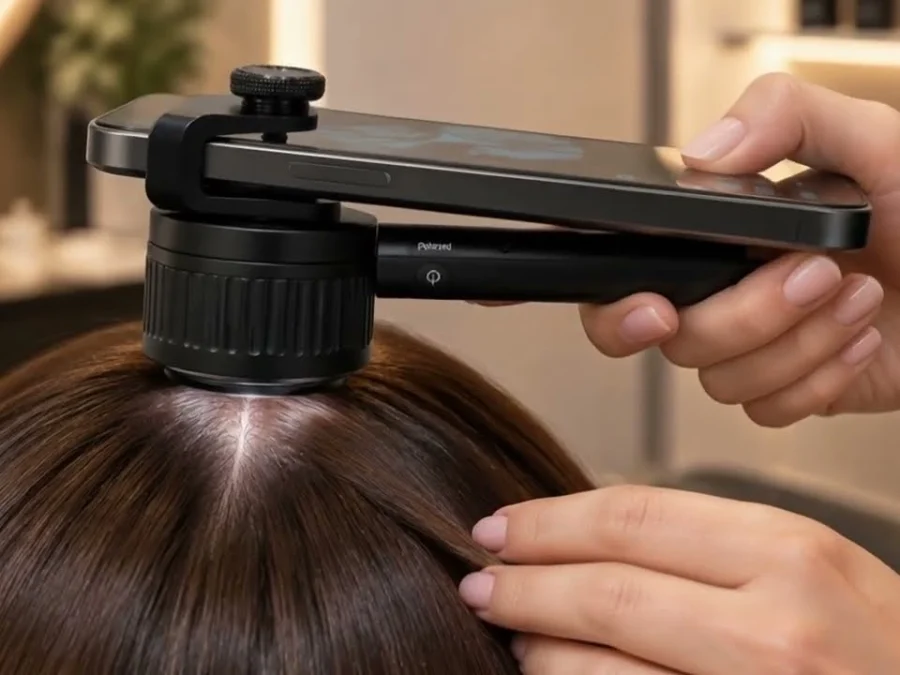
In short: royal jelly is the secretion that nurse bees produce to feed the queen. Made up of water, proteins, sugars, lipids (including 10-HDA) and B vitamins, it is used in cosmetics to condition and hydrate the hair fiber and the scalp. Evidence that royal jelly for hair has any effect on hair loss in humans remains limited, and it should be avoided by anyone allergic to bee products.
Royal jelly for hair comes up again and again in beauty advice, sometimes as a hair care ingredient, sometimes as a dietary supplement that is supposed to “strengthen” the hair. Between beekeeping tradition and modern formulation, it helps to separate what this ingredient actually delivers, what it cannot do, and when you are better off skipping it altogether.
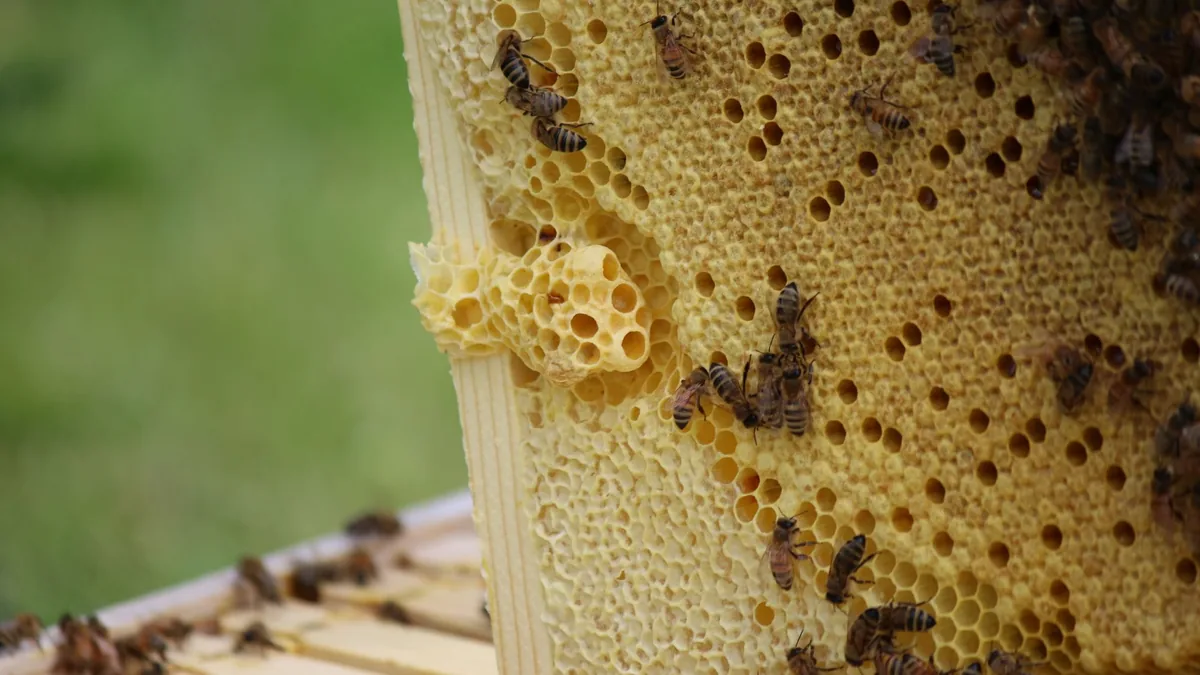
What is royal jelly?
Royal jelly is a whitish, acidic, gel-like substance secreted by the glands of young worker bees known as “nurse bees.” It is the exclusive food of the queen and of the larvae during their first days of life. Its composition explains the interest it attracts: mostly water, followed by proteins and amino acids, sugars, lipids, including 10-hydroxy-2-decenoic acid (10-HDA, a fatty acid characteristic of royal jelly), as well as B vitamins, minerals and trace elements.
It should not be confused with honey, propolis or bee pollen, which have very different compositions. Fresh royal jelly is delicate and must be kept refrigerated; in cosmetics, it is most often included in a stabilized form (extract or powder) in serums, masks or lotions.
Royal jelly for hair: what are the benefits in a cosmetic formula?
Applied to the hair, royal jelly works as a conditioning and hydrating ingredient. It does not change the biology of the follicle, but it may improve how the hair feels and looks, especially when it is fine, dry or weakened.
On the hair fiber
The proteins and amino acids it contains have an affinity for keratin. In a well-designed formula, they settle on the surface of the fiber, help smooth the cuticle and help the hair hold on to moisture. The expected result is cosmetic: a fiber that is softer, shinier, less prone to breakage during styling, and that looks fuller. The sugars act as humectants, which is useful on lengths that are dry or sensitized by hair color and heat styling.
On the scalp
On the skin of the scalp, royal jelly mainly offers a soothing and hydrating effect. The B vitamins and 10-HDA are often highlighted, but caution is warranted: the available data come mainly from laboratory models, and a comfortable scalp does not mean more hair. To understand why a balanced scalp is the foundation of any routine, see our page on scalp health.
Royal jelly as a dietary supplement: what we know
Royal jelly is also sold as capsules, in vials, or as fresh jelly to be taken orally. The arguments in its favor rest on its content of B vitamins, amino acids and minerals, nutrients involved in the hair cycle. Yet evidence of a direct effect on hair loss or hair density in humans remains limited. No supplement should be presented as a regrowth solution, and royal jelly is no exception.
It is more accurate to think of it as one nutritional contribution among many, within an already varied diet. If you suspect a deficiency (iron, zinc, vitamin D, protein), the right move is not to stack supplements but to see a doctor, who can order blood work. Our article on diet and hair details the nutrients that really matter.
Finally, when hair loss has set in, royal jelly is no substitute for a diagnosis or appropriate care. We walk through the different approaches, from a dermocosmetic routine to medical treatments, in our guide to hair loss treatment options.
Allergies and precautions: when to avoid royal jelly
Royal jelly is a recognized allergen. Reactions, sometimes severe, have been described, mostly after ingestion, in predisposed individuals. Caution is especially important in the following cases:
- Known allergy to bee products (honey, propolis, pollen, bee venom): avoid royal jelly, both in cosmetics and as a supplement.
- Asthma or a history of atopy: the risk of a respiratory or skin reaction is higher; ask your doctor before taking it orally.
- Pregnancy, breastfeeding, children: in the absence of sufficient data, consult a doctor or pediatrician.
- Damaged, irritated or inflamed scalp: do not apply any new product without a dermatologist’s advice.
Before any topical use, do a patch test on a small area of skin (inside the elbow or behind the ear) and wait one to two days. If you notice redness, itching, swelling or trouble breathing, stop using the product and seek medical attention promptly.
How to add royal jelly to your hair care routine
In practice, the cosmetic route is the simplest and the best tolerated. Here is how to go about it:
- Choose a suitable formula. A leave-in serum works well for fine, weakened hair that lacks body; a richer mask suits dry, thick lengths. Formulas that combine royal jelly, B vitamins and amino acids are worth considering for their complementary conditioning action.
- Apply to clean, towel-dried hair, from roots to ends, with your fingers or a wide-tooth comb, without overdoing it: on fine hair, too much product weighs it down more than it enhances it.
- Be consistent. Conditioning effects need to be maintained: allow several weeks of regular use before judging the real difference in feel and hold.
- Keep your overall routine sound. A gentle shampoo, drying at moderate heat and a clean scalp do more for how your hair looks than any single ingredient, however promising.
In the SIMONE TRICHOLOGY range, the leave-in serum Royal Jelly Hair Activator Plus was formulated with this in mind for fine, weakened hair: it combines royal jelly, B vitamins and amino acids to help the fiber look stronger and fuller, without weighing it down.
When to see a doctor instead of trying a new ingredient
Dull or brittle hair is most often a matter of cosmetic care. Certain signs, however, should send you to a dermatologist or doctor before you start experimenting: sudden, heavy shedding, localized areas of thinning, red, scaly or painful patches on the scalp, unusual fatigue alongside hair loss, or shedding that persists despite a suitable routine. In these situations, royal jelly for hair may support medical care, but it can never replace it.
Frequently asked questions
There is no basis for saying so. In cosmetics, royal jelly hair benefits come down to conditioning and hydrating the fiber, which makes hair look softer and fuller. As a dietary supplement, evidence of an effect on hair loss or regrowth in humans remains limited. It is not recommended. Fresh royal jelly is delicate, acidic and hard to dose; it spoils quickly and may irritate sensitive skin. Choose a stabilized cosmetic formula instead, and patch test it on a small area of skin first. People allergic to bee products, people with asthma or atopy, as well as pregnant or breastfeeding women and children without medical advice. If in doubt, ask your doctor or pharmacist. Yes, as long as the texture is lightweight and leave-in. Applied sparingly to towel-dried hair, it helps fine strands look denser and less prone to breakage, without weighing them down.Does royal jelly make hair grow back?
Can you apply pure royal jelly to the scalp?
Who should avoid royal jelly for hair?
Is a royal jelly serum suitable for fine hair?
You may also find these useful: oxygen hair treatment guide and approaches to alopecia areata.
This article is for general information and is not a substitute for personalized medical advice. SIMONE TRICHOLOGY products are dermocosmetic and are not intended to diagnose, treat, cure or prevent any medical condition.