





In short: tapered hair ends are hairs whose tip gradually narrows to a fine point. They may be new hairs that have never been cut (completely normal), shafts worn thin by fragility, or — if the fiber narrows toward the root, or hairs grow back thinner and shorter with every cycle — a sign of alopecia areata or miniaturization that should be evaluated by a dermatologist.
The tip of a hair tells its story: cut, broken, or grown undisturbed from the follicle. Here’s what tapered hair tips mean in trichology, when they’re simply new hair growth tips and when they’re not, and how to examine them properly, including at home.
What are tapered hair ends?
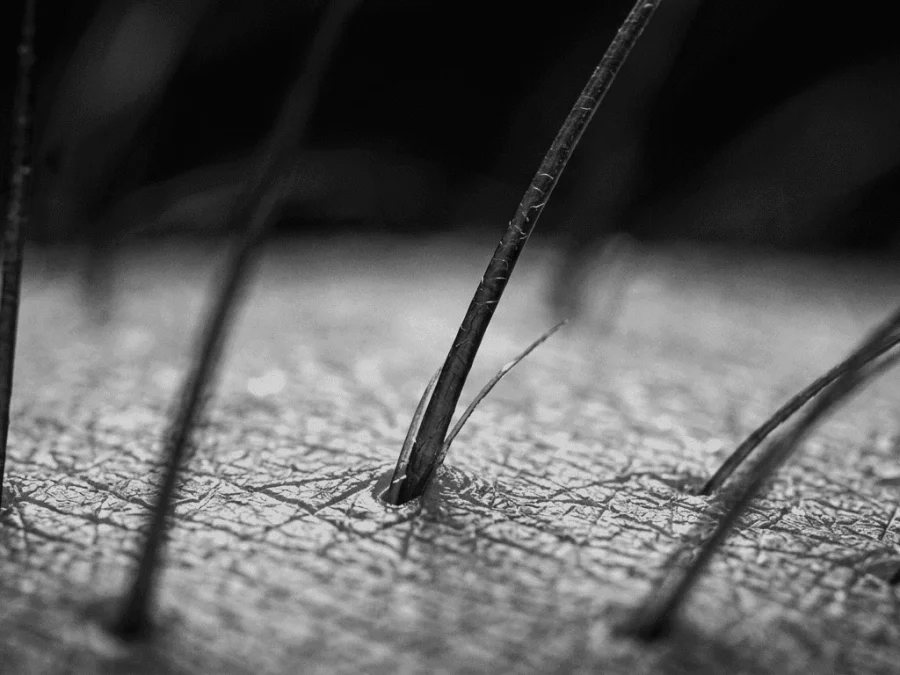
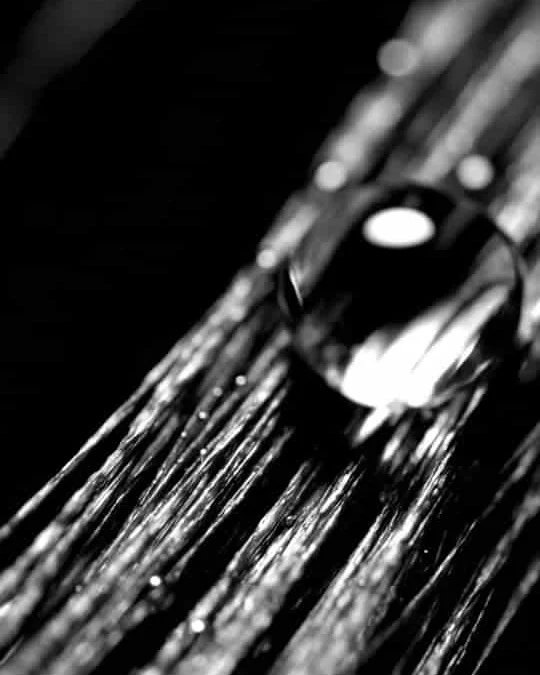
Every hair is born with a tapered tip. When the follicle enters its growth phase, it first produces a very fine fiber, which increases in diameter as its activity stabilizes. The result is a cone-shaped tip that feels soft to the touch. Until the hair is cut, it keeps its original end: the tapered tip is therefore the signature of new growth, of young children’s hair and of body hair.
In trichology, however, the term also describes hairs that thin out along the shaft, hairs that grow back finer and shorter with every cycle, and hairs that narrow close to the scalp. These are different situations with opposite meanings. For a refresher on how the fiber is built, start with the introductory chapter on the hair and its structure.
Tapered tip, blunt tip or broken tip? How to tell them apart
To get your bearings, compare the three types of ends a hair can have:
- Tapered tip. It narrows gradually until it disappears, like the point of a well-sharpened pencil. It indicates a hair that has never been cut: recent regrowth, new hairs along the hairline, or lengths that have never been trimmed.
- Blunt tip. It ends abruptly, with a flat, even edge. This is the sign of a cut: the diameter stays constant right to the end.
- Broken or frayed tip. It is irregular, often forked or “brush-like,” with a lifted cuticle and an exposed cortex. It is not a true tip but the point where the shaft gave way to mechanical wear, heat, chemical treatments or friction.
When the shaft thins out along its length
In long hair, the part farthest from the scalp is also the oldest: it has been through years of washing, brushing, blow-drying, sun exposure and friction against fabrics. Over time the cuticle wears down, the fiber loses part of its protection and the diameter shrinks. The lengths look finer than the roots and tend to break: this isn’t true tapering but progressive weathering of the fiber.
Variations in diameter can also form during growth if the follicle goes through a rough patch (an illness with fever, a very restrictive diet): the fiber develops localized constrictions, thinner and more fragile points that are visible under a microscope. The guide to hair shaft defects gives an overview of these abnormalities, while the article on why hair breaks explains how wear turns into breakage.
Miniaturization: tapered hairs that keep getting thinner and shorter
Here the meaning changes. In androgenetic alopecia (pattern hair loss), genetically predisposed follicles respond to androgen hormones by progressively shortening the growth phase and reducing the diameter of the fiber. With every cycle, the hair grows back finer, shorter and often less pigmented than the one before, until it resembles an almost invisible fuzz: this is miniaturization.
Miniaturized hairs always have tapered tips, because they are so short that they have never been cut. The problem isn’t the tip itself but the coexistence, in the same area, of hairs with very different diameters, with a growing proportion of extremely fine fibers. The areas most commonly affected are the temples and crown in men and a widening center part in women. This picture calls for a medical evaluation: only a dermatologist can confirm the diagnosis and outline the available options. Dermocosmetic care can support the well-being of the scalp and fiber, but it does not change the underlying process.
Exclamation point hairs: when the hair narrows toward the root
There is also a tapered hair “in reverse”: the thicker, darker end is the distal one, while the fiber narrows and lightens as it approaches the scalp. Under a magnifying glass it looks like an exclamation point, hence the name. These hairs are short, are often found at the edges of a bald patch, and come out easily.
They are a characteristic sign of alopecia areata, an autoimmune condition in which the follicle is temporarily “attacked” while it is producing the fiber, which emerges weakened and thin right at the base. This is not a dermocosmetic issue: if you notice smooth, round patches, with or without these hairs, see a dermatologist promptly. In children, the first point of contact is the pediatrician, who can refer you to a specialist.
How to examine tapered hair tips: trichoscopy and your hairbrush
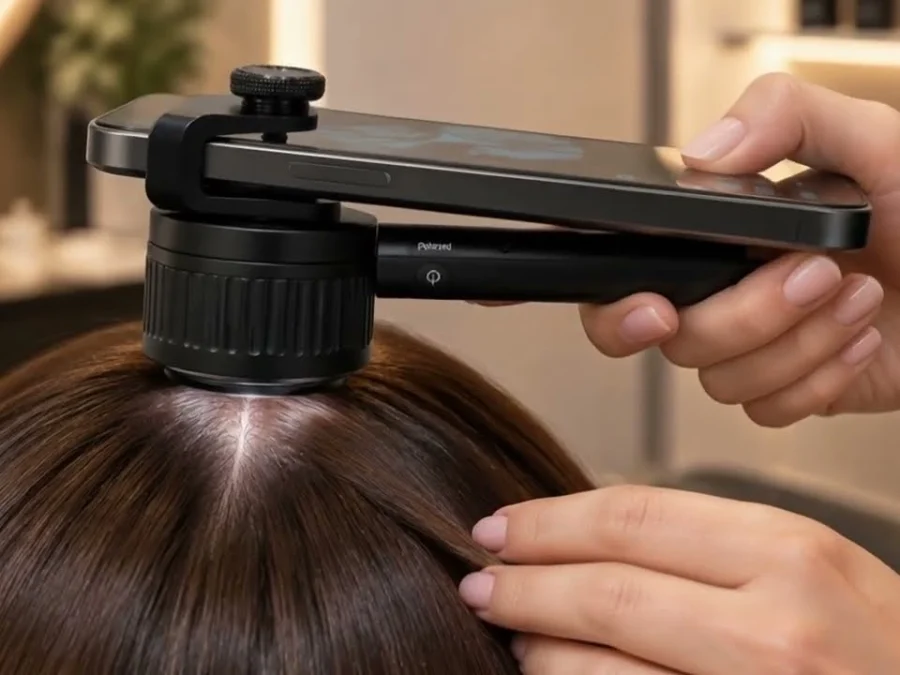
The reference tool is trichoscopy: examining the scalp and hair shafts with a dermatoscope, which makes it possible to assess hair diameter, count how many fibers emerge from each follicular unit, and identify exclamation point hairs or the variability in diameter typical of miniaturization. It is a quick, non-invasive examination.
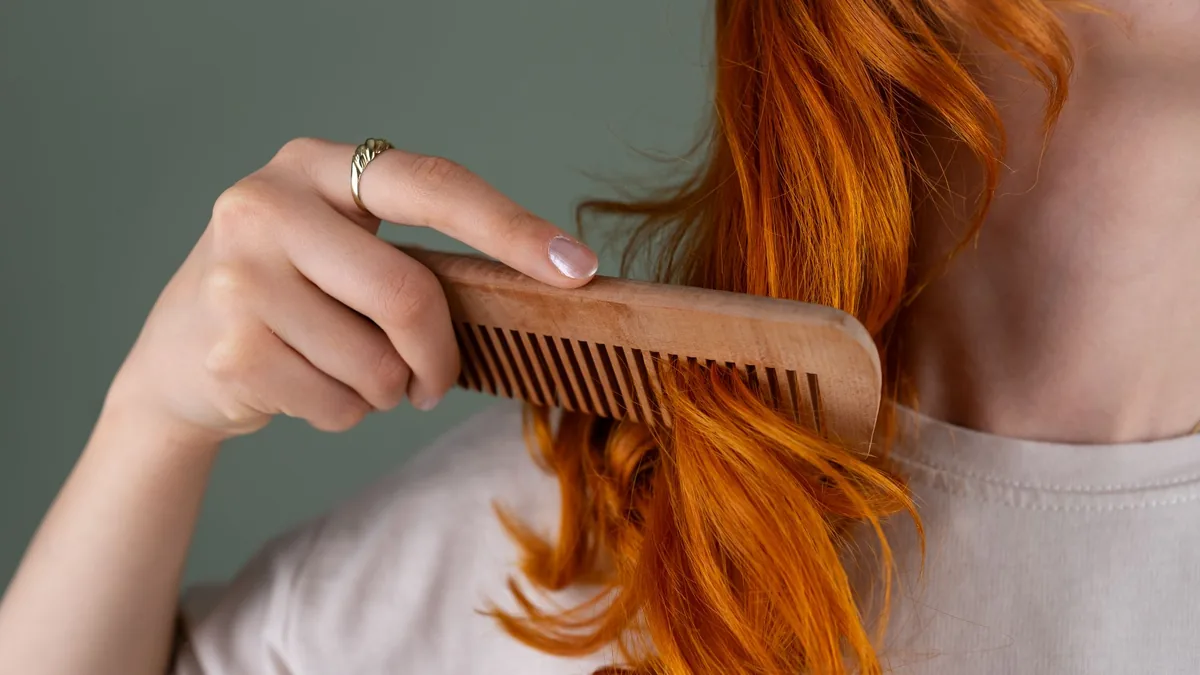
At home you can do a simpler but still useful check: collect the hairs shed in your brush or sink, lay them on a sheet of white paper under good light, with a magnifying glass if you have one, and ask yourself:
- Do they have a bulb? A small, pale swelling at the base indicates a hair shed at the end of its cycle: that’s normal turnover, especially if its length is similar to the rest of your hair.
- Are they short, fine and tapered at the tip? Hairs only an inch or two long, thin, with a bulb and a cone-shaped tip, found in growing numbers, deserve a trichoscopy: they could be miniaturized hairs.
- Are they fragments without a bulb? Pieces of varying length with a frayed end are broken hairs, not shed hairs: the problem is in the fiber, not the follicle.
- Are they thicker at the tip than at the base? That’s the exclamation point profile: a reason to schedule a dermatology appointment.
If you’re unsure about what you’re seeing, the online Hair Clinic lets a trichology specialist review a few photographs and a short questionnaire and send you a no-obligation assessment. It doesn’t replace trichoscopy or a dermatologist’s opinion, but it can help point you in the right direction.
When to see a dermatologist
Tapered hair ends are normal when they’re simply new hairs. But do seek a medical evaluation if you notice bald patches, hairs that narrow toward the scalp, more and more short, thin hairs in your brush, a widening part or a receding hairline, or shedding accompanied by itching, pain, redness or flaking. The sooner you start observing, the more information the specialist will have.
Frequently asked questions
Not necessarily. A tapered tip only means the hair has never been cut: it’s normal in regrowth and in short new hairs. It becomes a signal worth investigating when the tapered hairs are increasingly thinner and shorter than the others, or when they narrow toward the root. A tapered hair ends in a cone-shaped tip that is smooth, even and soft. A broken hair ends irregularly, often with split ends or a frayed tip, because the shaft gave way to mechanical wear, heat or chemical treatments. They are short hairs that are thicker and darker at the tip and finer and lighter toward the scalp. They are typical of alopecia areata and call for a visit to the dermatologist, not a cosmetic treatment. You can spot clues, such as many short, thin hairs in your brush or a wider part, but confirmation requires a trichoscopy performed by a professional, who assesses hair diameter and how much it varies.Are tapered hair ends a sign of hair loss?
What's the difference between tapered hair tips and broken hairs?
What are exclamation point hairs?
Can I recognize miniaturization at home?
You may also find these useful: trichorrhexis invaginata or bamboo hair and cuticle, cortex and medulla.
This article is for general information and is not a substitute for personalized medical advice. SIMONE TRICHOLOGY products are dermocosmetic and are not intended to diagnose, treat, cure or prevent any medical condition.