





If your hair feels finer than it used to, your ponytail thinner, or your parting a little wider — and you’re approaching or going through menopause — you’re far from alone. Changes to hair are one of the most common, and least talked about, parts of the menopause transition. Understanding why it happens is the first step to looking after your hair through it.
Why hair changes around menopause
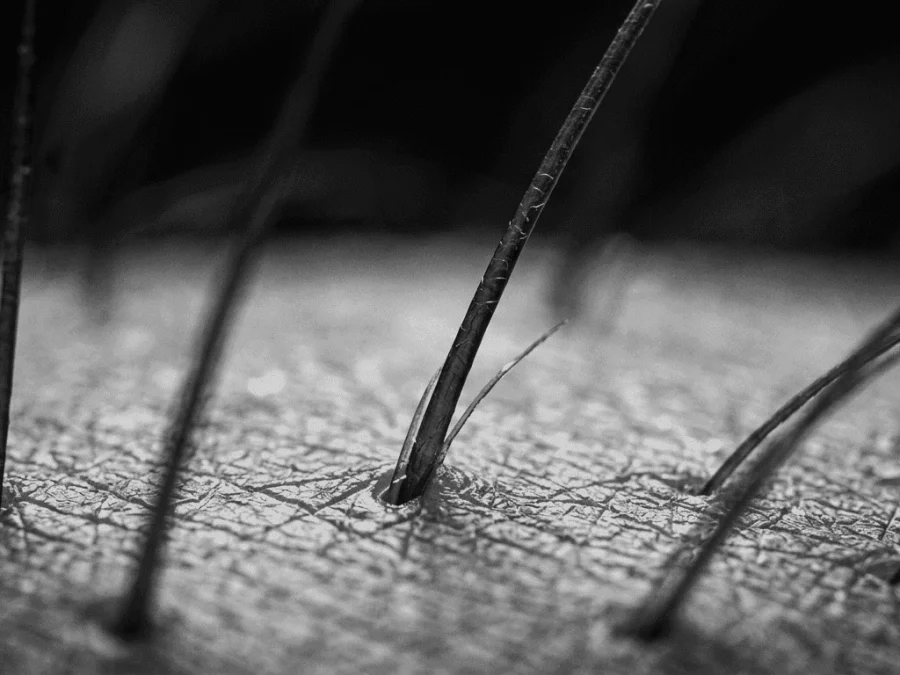
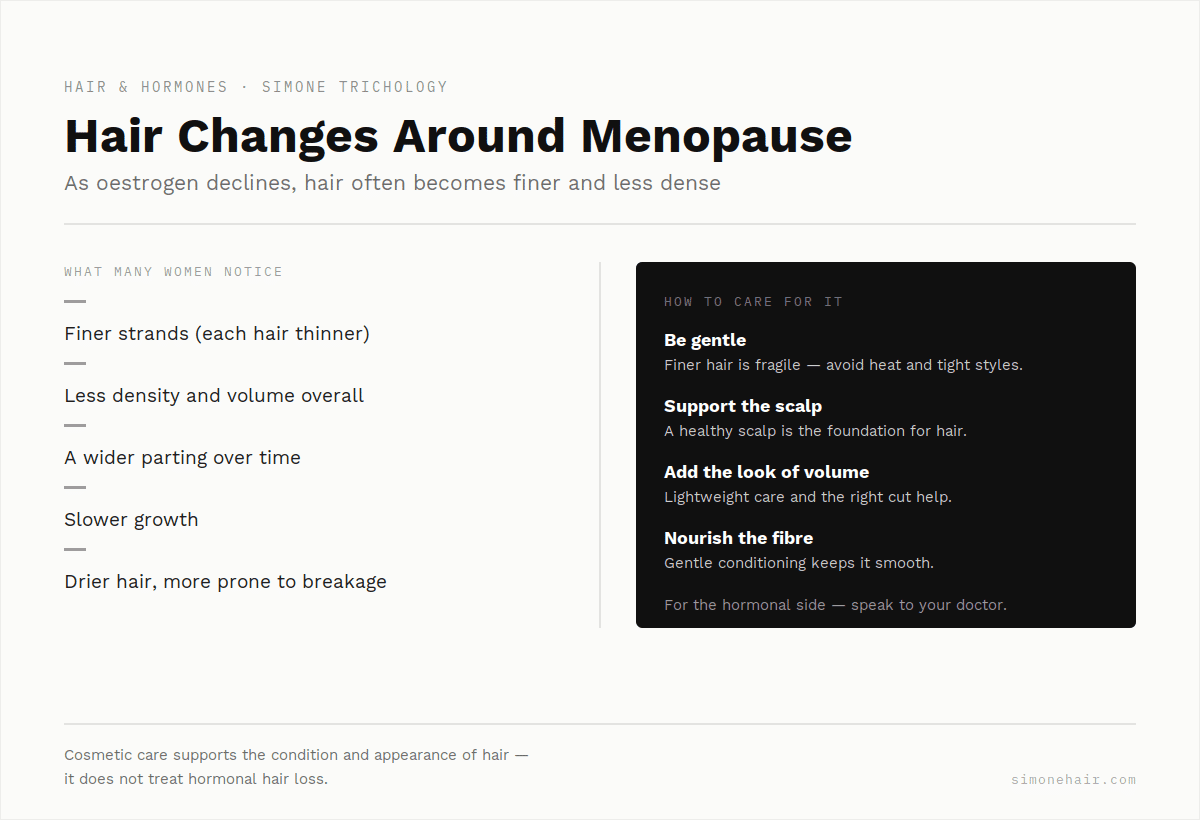
Hair is sensitive to hormones, and menopause brings a significant hormonal shift. As levels of oestrogen decline, the balance that previously supported fuller, faster-growing hair changes. Many women notice their hair becoming finer (each strand thinner), less dense overall, slower to grow, and sometimes drier or more prone to breakage. The scalp can feel different too.
This is a gradual, natural change rather than something that happens overnight, and it varies a great deal from one woman to another — genetics, general health and stress all play a part alongside hormones.
Is it the same as other hair loss?
Menopausal thinning is part of the broader picture of hormonal hair change in women — in the same family as the shedding many experience after pregnancy, though driven by a different stage of life. If you’d like to understand the different types of hair loss and when each tends to happen, our overview of hair loss explained is a useful starting point.
Importantly, not all hair change around this age is purely hormonal. Thyroid changes, iron levels, stress and other factors can all contribute — which is why getting a proper assessment matters rather than assuming.
Because menopausal thinning sits within the wider pattern of female hair loss, that guide puts it in context alongside pregnancy, postpartum and other hormonal stages
How to care for your hair through menopause
While the hormonal side is a matter for you and your doctor, there’s a great deal you can do to look after the condition, comfort and appearance of your hair and scalp:
- Be gentle. Finer hair is more fragile. Avoid aggressive brushing, tight styles and excessive heat, which add breakage on top of thinning.
- Support the scalp. A healthy, comfortable scalp is the foundation for hair. Keep it clean and balanced, and address any dryness, itching or sensitivity.
- Add the look of volume. Lightweight, volumising care and the right cut can make finer hair look fuller, even as its texture changes.
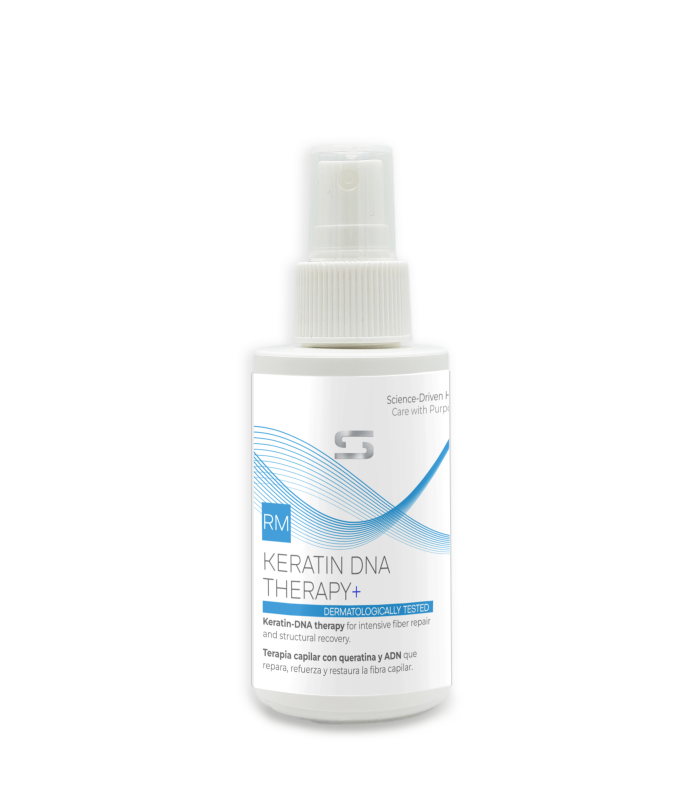
- Nourish the fibre. Drier, finer hair benefits from gentle conditioning and restructuring care to keep it smooth and reduce breakage.
- Look after yourself overall. Balanced nutrition, managing stress and good general health all support your hair during the transition.
The aim of good trichological dermocosmetic care here is realistic and reassuring: to keep your hair and scalp in the best possible condition, and your hair looking as full and healthy as it can, while the underlying changes are managed appropriately.
When to see a professional
It’s worth speaking to your doctor or a trichologist if your hair is thinning noticeably or quickly, if you can see the scalp clearly through the hair, or if thinning comes with other symptoms such as fatigue, weight changes or changes to your periods — these can point to factors beyond menopause that are worth checking. Your GP can also discuss medical options, including whether hormone-related treatment is appropriate for you; that’s a conversation for them, not a cosmetic one.
Not sure what's behind your thinning?
Because hair thinning around this age can have several overlapping causes, identifying yours is the key to addressing it well. Our online Hair Clinic offers a free, no-commitment pre-assessment: a few targeted questions about your hair, scalp and stage of life, and personalised guidance on how to care for your hair — and whether a closer look would help.
SIMONE TRICHOLOGY products are cosmetic products and are not intended to diagnose, treat, cure or prevent any medical condition, including hormonal hair loss. If you are experiencing noticeable hair thinning, please consult a doctor or qualified healthcare professional.