





In short: Telogen effluvium is a diffuse, temporary hair shedding that starts about 2–3 months after a trigger such as high fever, COVID-19, surgery, childbirth, major stress or a crash diet. The shed hairs show a small white bulb, but the follicles are not destroyed. In acute cases, shedding usually settles within about six months once the trigger is corrected, and regrowth follows gradually.
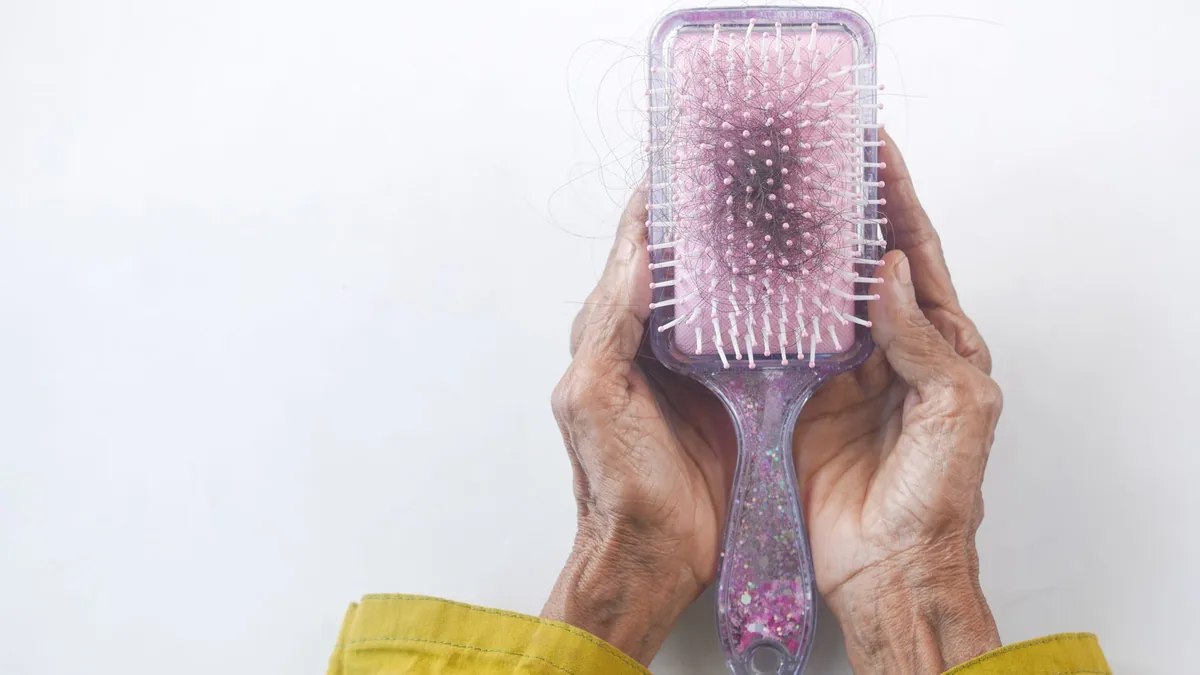
If you are suddenly finding far more hair on your brush and in the shower drain, yet see no bald patches, telogen effluvium is one of the first things a trichologist will consider. This guide explains why stress hair loss and hair loss after COVID follow such a predictable delay, how to tell it apart from other types of alopecia, and what telogen effluvium recovery realistically looks like.
What telogen effluvium is, and what the white bulb means
Each follicle cycles through a growth phase (anagen) lasting several years, a brief transition (catagen) and a resting phase (telogen) of a few months, after which the old hair is released and a new one grows in its place. Normally the follicles are out of step with one another, so only a small share is resting at any given time.
Telogen effluvium (TE) occurs when a trigger pushes a much larger proportion of follicles than usual out of anagen and into telogen at the same time. Nothing is visible at first; a few months later, when those resting hairs reach the end of telogen together, they fall together, and the shedding seems to come out of nowhere. It is diffuse (the whole scalp, not one area) and non-scarring.
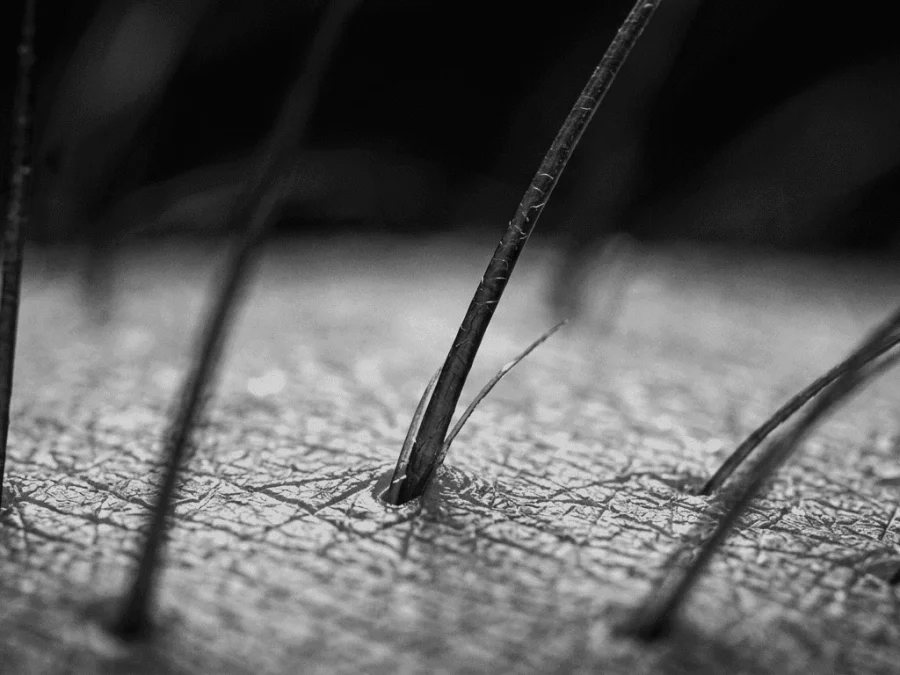
The hairs you collect have a small white or translucent swelling at the end. Many people read this as “the root coming out,” but it is a club hair: the keratinized base every hair forms when it finishes its cycle, without the soft sheath of a growing hair. The follicle has not died; it remains in the scalp and, in most cases, is already preparing the next hair. Our chapter on hair loss and alopecia shows where this type of shedding fits among the others.
Common triggers: from stress hair loss to hair loss after COVID
Almost any significant shock to the body or mind can set the process off. The triggers seen most often are:
- High fever or acute illness. Influenza, COVID-19 and other infections. Hair loss after COVID is usually a textbook telogen effluvium appearing a couple of months after the infection.
- Surgery. Anesthesia, tissue healing and the stress of the event itself.
- Major psychological stress. Bereavement, a separation, burnout. Stress hair loss is real, but it follows the same delay as any other trigger: today’s shedding reflects what happened two or three months ago.
- Childbirth. The hormonal shift after delivery releases hairs that were held in growth during pregnancy; our article on postpartum hair loss covers this form of telogen effluvium.
- Crash, very-low-calorie or low-protein diets and rapid weight loss. When intake drops sharply, the follicles are among the first to slow down.
- Iron deficiency and other nutritional deficits. Low iron stores are a common finding, particularly in women.
- Thyroid disorders. Both an underactive and an overactive thyroid can disturb the hair cycle.
- Starting or stopping some medications. Hormonal contraception is a well-known example, and some other drugs can be associated with shedding. Never stop a prescribed medication on your own; discuss it with the doctor who prescribed it.
The telogen effluvium timeline: why the shedding starts months later
The delay confuses almost everyone: by the time hair starts falling, the trigger may be forgotten or feel unrelated. The sequence is predictable:
- The trigger. A large group of follicles leaves the growth phase early. Nothing changes on the outside.
- About 2–3 months later (roughly 6–12 weeks): shedding begins. The resting phase ends and the new anagen hair growing beneath pushes the old club hair out.
- The following weeks: the peak. Shedding is at its most noticeable, the pull test is positive and the ponytail feels thinner.
- Within about six months of onset: settling. In acute telogen effluvium, once the trigger has passed or been corrected, shedding generally returns to normal levels.
- 6–12 months and beyond: volume returns. New hair grows at roughly 1 cm per month, so density needs many months to look the same. Short, fine hairs standing up along the hairline are an early visible sign of regrowth.
When shedding persists or fluctuates for more than six months, it is called chronic telogen effluvium. It is seen mostly in women, often has no single identifiable trigger and tends to come in waves. It does not cause baldness on its own, but it calls for a medical work-up to rule out an ongoing cause.
How much shedding is normal?
The often-quoted figure of 50 to 100 hairs a day is a rough guide rather than a precise threshold. What you see also depends on how often you wash: shampooing every three days means three days’ worth of detached hairs in the drain at once, which looks dramatic but is not more loss. Hairs that come away in the shower or on the brush had already finished their cycle; washing simply collects what was going to fall anyway.
Many people also notice a mild rise in shedding in late summer and fall that settles on its own; our article on seasonal hair shedding explains how to tell it apart from an effluvium.
Telogen effluvium, androgenetic alopecia or something else?
Three patterns account for most consultations, and the way the hair is lost usually tells them apart:
- Telogen effluvium: sudden onset; diffuse across the whole scalp, no patches; shed hairs of normal thickness; positive pull test during the active phase; a trigger can often be found two to four months back.
- Androgenetic alopecia: gradual, over years; patterned — a widening part and thinning crown in women, receding temples and crown in men; hairs become progressively finer and shorter (miniaturization) because of inherited androgen sensitivity.
- Alopecia areata: one or several smooth, well-defined patches of complete loss that appear quickly, with the rest of the scalp unaffected.
The two can also coexist. Telogen effluvium does not cause baldness on its own, but by shedding many hairs at once it can unmask an androgenetic alopecia that was progressing underneath. If the shedding has settled yet the part keeps widening, or the regrowing hairs are visibly finer than the old ones, it is time for a professional assessment. Our general guide to hair loss covers the full range of types and causes.
How a trichologist confirms the diagnosis
There is no single test; the diagnosis is built from several pieces:
- History. What happened two to four months before the shedding began: illness, fever, surgery, a birth, a diet, a medication change, a stressful event.
- Pull test. A small bundle of hairs is gently tugged in several areas; in active TE more hairs than usual come away, and they are club hairs.
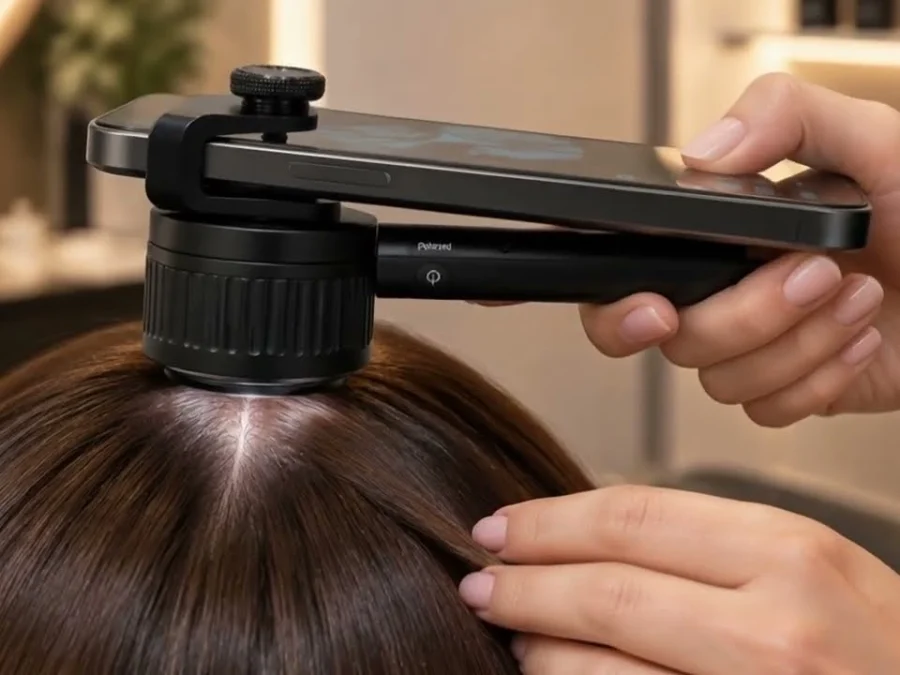
- Trichoscopy. Under magnification: no significant variation in hair diameter (unlike androgenetic alopecia), many short regrowing hairs and some empty follicular openings.
- Trichogram. A sample of plucked hairs is examined under the microscope to estimate the proportion in the telogen phase.
- Blood tests. Depending on the history, a doctor may order ferritin and iron, thyroid function, vitamin D, vitamin B12 and a blood count, among others, to look for a correctable cause.
Telogen effluvium recovery: what helps and what to expect
Once the trigger is gone, the body does most of the work; good management removes obstacles and avoids doing harm.
- Identify and correct the trigger. Correct a confirmed deficiency, have a thyroid disorder treated, review medications with the prescriber, and let the body recover from the illness or surgery.
- Eat enough, and enough protein. Hair needs calories, protein, iron and vitamins; very restrictive diets during recovery can prolong the problem.
- Manage stress where you can. Sleep, exercise and whatever genuinely lowers your stress; worrying about the hair itself is a stressor too.
- Be gentle with the hair you have. No tight ponytails, braids or extensions; detangle from the ends; keep heat moderate. Keep washing at your usual frequency: skipping washes only delays the moment you see hair fall.
- Supplements only when a deficiency is confirmed. Correcting low iron or vitamin D under medical guidance makes sense; high doses “just in case” have not been shown to speed recovery and are not risk-free.
- Topical care without expectations. Scalp products can keep the scalp comfortable and the fiber in good condition, but none should be expected to stop an effluvium or guarantee regrowth.
- Patience. Shedding usually slows over a few months; visible density can take 6–12 months or longer to return.
When to see a doctor
Most acute episodes resolve on their own, but some situations warrant a visit to a dermatologist or your primary care doctor:
- Shedding that has continued for more than about six months, or keeps returning.
- Visible thinning in a pattern (part, crown, temples) or any bald patches.
- Scalp symptoms: itching, burning, redness, scaling or pain.
- Other symptoms alongside the hair loss, such as fatigue or unexplained weight change.
- You cannot identify any trigger in the months before the shedding began.
If you are unsure whether this is a passing effluvium or something that needs attention, our free online Hair Clinic lets a trichology specialist review a few photos and a short questionnaire, with no obligation, and advise you on whether a medical consultation should be your next step.
Frequently asked questions
In the acute form, shedding begins about 2–3 months after the trigger and generally settles within around six months once the trigger has been removed. Visible volume takes longer, often 6–12 months or more, because new hair grows roughly 1 cm per month. Usually not. It is typically a telogen effluvium triggered by the fever and illness: the follicles are not destroyed and regrowth usually follows over the following months. If shedding continues beyond six months or thinning becomes patterned, see a dermatologist. Yes. Major psychological stress is a recognized trigger. Stress hair loss appears two to three months after the difficult period, which is why the link is often missed, and it usually settles once stress levels and sleep have stabilized. No. Hairs that fall in the shower were already detached; washing simply collects them. Keep your normal frequency, handle the hair gently and avoid tight styles, but do not space out washes to “save” hair — it only delays what you see.How long does telogen effluvium last?
Is hair loss after COVID permanent?
Can stress alone cause telogen effluvium?
Does washing my hair more often make telogen effluvium worse?
This article is part of our guide to hair loss and alopecia. You may also find these useful: female vs male pattern hair loss and iron deficiency and hair loss.
This article is for general information and is not a substitute for personalized medical advice. SIMONE TRICHOLOGY products are dermocosmetic and are not intended to diagnose, treat, cure or prevent any medical condition.